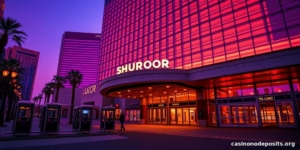


On Thursday, Resorts World NYC received a resounding endorsement from the community advisory committee (CAC) in Queens, which unanimously approved the casino proposal with a 6-0 vote. This approval is a significant step forward, as the proposal now heads to the New York State Gaming Facility Location Board (GFLB) for further consideration.
The GFLB will conduct an in-depth review of the proposal, scheduled to be completed by December 1. The board will evaluate all remaining casino proposals and make recommendations to the New York State Gaming Commission by the end of the year. The commission has until December 31 to distribute up to three commercial casino licenses in the downstate area.
Amid eight proposals advancing to the CAC phase, Resorts World NYC stood out as a favorite from the start. The facility benefits from an existing infrastructure, including a video lottery terminal operation established in 2011, and plans a casino launch by July 2026, the fastest timeline among contenders. Over the years, it has contributed billions in tax revenue, enhancing its appeal as a leading candidate.
MGM Empire City, another frontrunner, also gained unanimous approval earlier that day. However, the landscape is becoming more competitive as three casino projects in Manhattan were denied by their respective CACs, narrowing the field to the two racinos and a few other contenders.
Public support has played a crucial role in the approval process, with Resorts World’s hearings receiving overwhelmingly positive feedback compared to other applicants. With the backing of the local community and its established strengths, the proposal’s approval seemed almost inevitable. Queens is now a strong contender for securing at least one casino license, and attention is turning to upcoming votes, such as the one for Metropolitan Park in Queens, slated for Tuesday.
During the vote, Queens Borough President Donovan Richards quipped about the rapper Jay-Z’s unsuccessful support for Caesars Times Square, playfully asserting the borough’s triumph and casting his vote in favor.
The next phase for Resorts World involves paying a $1 million application fee to enter the GFLB review. This independent body, comprised of appointed members with no industry ties, will scrutinize each proposal. Current members include Vicki Been, chair and NYU Law professor, Terryl Brown, vice president and general counsel at Pace University, Marion Phillips III, senior vice president at US News and World Report, and retired finance executive Greg Reimers.
Key considerations for the GFLB will include revenue projections and the potential impact on existing facilities and other proposals. Each applicant has submitted estimates under various licensing scenarios, and proposals will be judged on four main criteria: Economic Activity & Business Development (70%), Local Impact Siting (10%), Workforce Enhancement (10%), and Diversity Framework (10%).
Resorts World also has the opportunity to negotiate its tax rate, provided it meets a minimum of 25% for slot revenue and 10% for other gaming activities. MGM’s CEO, Bill Hornbuckle, noted the requirement for MGM to maintain existing tax rates, which are notably higher for video lottery terminals. Resorts World’s commitment to substantial tax contributions, including a pledge to pay over $1 billion annually, indicates its readiness to meet these obligations.
As the race narrows, questions arise about which additional proposals might progress beyond the CAC phase. While there was an expectation that committees might keep options open by approving as many proposals as possible, the swift rejection of all Manhattan bids has shifted this perspective. The upcoming vote on The Coney, with three CAC members already expressing opposition, further complicates the outlook.
If The Coney is denied, only Bally’s Bronx and Metropolitan Park will remain as viable contenders. Bally’s, despite addressing CAC concerns, faces operational and financial hurdles, while Metropolitan Park leverages the influence of billionaire Mets owner Steve Cohen. However, the possibility that two licenses might be granted within Queens raises strategic questions about distribution.
These developments underscore the complexities of the licensing process. Even with three licenses available, the regulators might choose not to allocate all of them immediately, reflecting a cautious approach to market saturation and competitive balance. The unfolding narrative highlights both the competitive nature and the high stakes of securing a coveted New York casino license.
Topics: New York · Licensing · Gambling Taxes · Product Launches · Financial Results · Gambling Regulation
Looking for somewhere to play? Browse our current no deposit bonus listings, with verified codes and the full wagering terms for each offer.
 4.5/5
4.5/5