

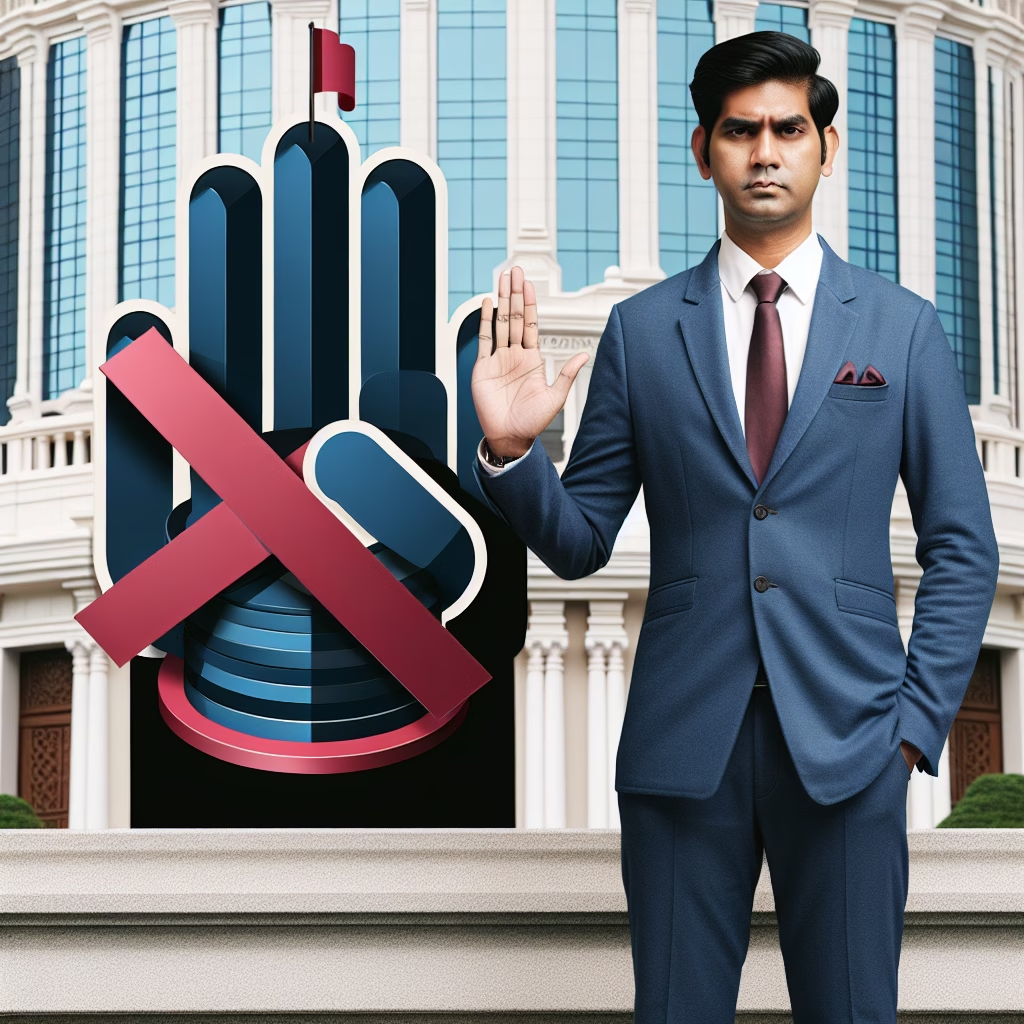
On September 5, Anutin Charnvirakul became Thailand’s new prime minister and promptly declared that the kingdom would not legalize casinos during his tenure. Charnvirakul, leader of the Bhumjaithai Party, emphasized that any hopes for a legal casino industry must wait for a future administration. This decision marks a significant shift from the previous administration’s stance, where the Entertainment Complex Bill was a contentious yet prominent proposal.
The Entertainment Complex Bill, championed by former leaders Srettha Thavisin and Paetongtarn Shinawatra of the Pheu Thai Party, aimed to rejuvenate Thailand’s tourism sector in a post-Covid world. Both former leaders served brief terms, each leaving office amid ethics controversies. Paetongtarn’s suspension by the Constitutional Court led to the bill being withdrawn from the parliamentary agenda on July 8.
Proponents of the bill argued it would attract international investment and boost tourism. However, Charnvirakul has been a vocal critic, suggesting that the bill did more harm than good. He believes the proposal alienated Thailand’s primary tourist market, China, causing a significant drop in Chinese visitors.
In February, during a state visit to Beijing, former Prime Minister Paetongtarn was advised by Chinese President Xi Jinping to reconsider the bill, highlighting the potential crime risks associated with casinos. Charnvirakul claims that Xi warned of “measures to significantly reduce Chinese travel, trade, and investment with Thailand” if the bill proceeded. Despite this, the Thai government escalated the bill through legislative processes, allegedly ignoring Xi’s concerns, which Anutin argues led to a steep decline in tourism.
Data from Nation Thailand indicates a 34% reduction in Chinese tourist arrivals during the first half of 2025, with a total annual decrease of 7% so far. This decline has been costly for businesses reliant on tourism. Nonetheless, Natthriya Thaweevong from the Tourism Authority of Thailand (TAT) offers alternative explanations, including the impact of the deadly earthquake that struck both Myanmar and Thailand in April, along with wider global economic difficulties. In response, TAT has adjusted its forecast for foreign arrivals down from 37 million to 33 million, which remains a stark contrast to the 40 million tourists in 2019.
The political instability in Thailand adds another layer of complexity to the situation. Dhanakorn Kasetrsuwan, chairman of the Thai National Shippers’ Council, notes that the current political uncertainty creates a climate of hesitation among investors and consumers. “Uncertainties during a political vacuum create a wait-and-see climate for both investment and consumption,” he remarked, expressing concern that prolonged instability could further slow economic growth and dampen foreign investment prospects.
This sentiment is echoed by Bill Barnett, managing director of Phuket’s consultancy C9Hotelworks, who fears the effects of political turbulence on the hospitality industry. Just a few months ago, there was optimism for a robust end to the year. Now, he sees momentum waning, describing the situation as troubling for the sector.
With Charnvirakul required to call a general election within four months, the political landscape remains unsettled. A recent survey by the National Institute of Development Administration revealed that 59.24% of voters favor dissolving parliament as quickly as possible, highlighting a widespread desire for political resolution.
While Charnvirakul’s stance on casinos aligns with his party’s platform, it contrasts sharply with the economic aspirations of many stakeholders who see legalized gambling as a potential boon for the economy. Critics argue that by rejecting the Entertainment Complex Bill, Thailand may miss out on a lucrative opportunity to attract international tourists and investors.
Conversely, supporters of Charnvirakul’s decision view it as a protective measure for Thailand’s societal values and public safety. They argue that the social costs of gambling-related crime and addiction could outweigh the economic benefits, especially if it leads to strained relations with China, a crucial partner.
As Thailand navigates these challenging waters, the country’s leadership faces the task of balancing economic growth with social responsibility, all while managing political instability. The future of Thailand’s tourism and broader economic strategy remains uncertain, with the next few months likely to be pivotal in shaping the nation’s direction.
Topics: Thailand · China · Executive Appointments · Gambling Regulation · Enforcement
Looking for somewhere to play? Browse our current no deposit bonus listings, with verified codes and the full wagering terms for each offer.
 4.5/5
4.5/5