

On November 4, 2025, Wisconsin lawmakers initiated discussions around Senate Bill 592, a proposal aimed at legalizing online sports betting through partnerships with the state’s tribal nations. This legislative move marks the beginning of what could be a significant expansion of gambling in Wisconsin, traditionally confined to in-person venues.
The proposal was brought before the Senate Committee on Agriculture and Revenue, where Senator Howard Marklein, one of the co-authors of the bill, emphasized the potential benefits of legalizing an activity that many residents already participate in illegally. “If we do this, it will legalize what a lot of people do right now illegally,” he stated during the hearing. Marklein underscored the opportunity to regulate and tax the practice, generating much-needed revenue for the state.
Senate Bill 592 outlines a “hub-and-spoke system” that would enable Wisconsin’s 11 tribal nations to collaborate with online sports betting operators. A key condition is that wagering servers must be located on federally recognized tribal land. This model mirrors the setup in Florida, where the Seminole tribe holds exclusive rights to operate sports betting.
For the tribes to engage in this new venture, they would need to renegotiate existing gaming compacts with the state, while also securing approval from the federal Bureau of Indian Affairs. The bill was co-authored by Senator Marklein alongside Representatives Kalan Haywood and Tyler August, as well as Senator Kristin Dassler-Alfheim.
Representative Kalan Haywood previously highlighted the impact of unregulated sports betting, often managed by offshore entities that profit without contributing to local economies. Formal regulation, he argued, would channel this substantial industry into a legal framework, enhancing consumer safety and generating revenue for community investment.
The Ho-Chunk Nation, a key player in Wisconsin’s tribal gaming landscape, expressed strong support for the bill. They have previously taken legal action against prediction market operator Kalshi for allegedly conducting illegal sports betting on tribal land. During the hearing, the Ho-Chunk Nation stressed the potential financial benefits for their extensive tribal government.
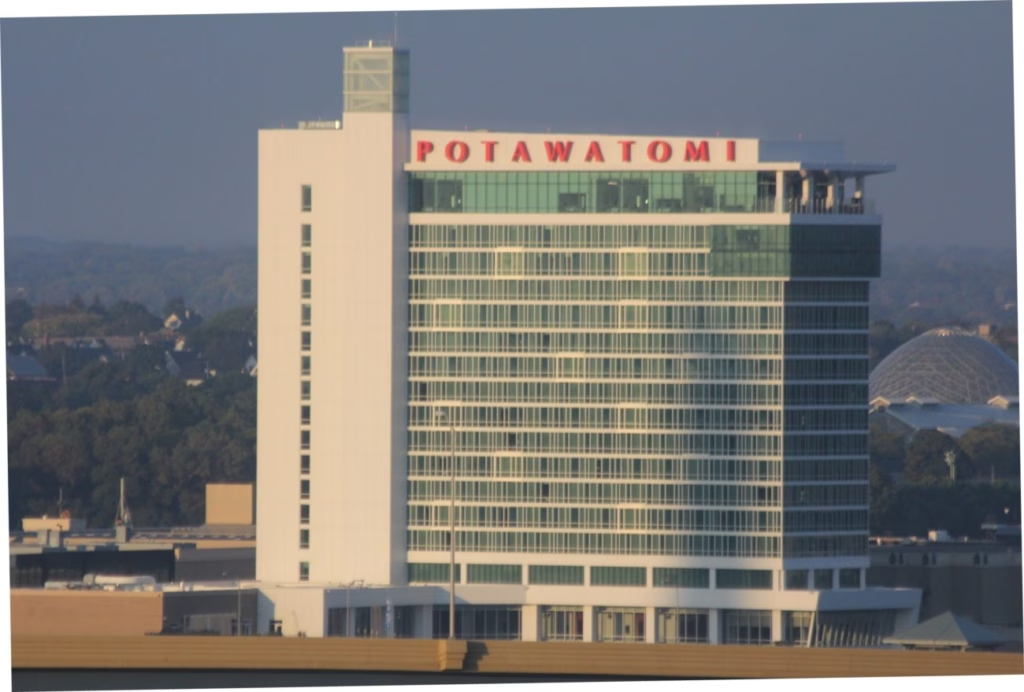
Attorney General Jeff Crawford of the Forest County Potawatomi Community also spoke in favor of the legislation, noting that major Wisconsin sports teams like the Milwaukee Bucks, Milwaukee Brewers, and Green Bay Packers are proponents of legal sports betting. Crawford pointed out that a regulated market could offer significant consumer protections and measures against problem gambling, addressing the millions of dollars already wagered illegally each year by Wisconsin residents.
However, not all reactions to the bill were favorable. Senator Andre Jacque raised concerns about expanding gambling forms in the state, reflecting a cautious approach to the legislative proposal.
Additionally, the Sports Betting Alliance (SBA), representing major sportsbook operators, expressed reservations. While supportive of legalizing online sports betting in principle, they disagreed with specific elements of the proposed legislation. The SBA highlighted that the bill’s framework, based on the Indian Gaming Regulatory Act (IGRA), would require operators to remit 60% of their revenue to partner tribes, a figure the SBA counsel argued is economically unfeasible for big players like DraftKings and FanDuel. “That number is so large, they would lose money – it just won’t work for them,” the counsel remarked, suggesting that alternative partnership structures could be more viable.
Notably, DraftKings already operates in Wisconsin through a partnership with the Lac du Flambeau Band of Lake Superior Chippewa Indians, offering in-person sports betting at Lake of the Torches Resort Casino. This existing relationship exemplifies how such partnerships can be mutually beneficial under different terms.
The discussion around Senate Bill 592 is set against a backdrop of evolving gambling laws in Wisconsin. In 2021, Governor Tony Evers negotiated compacts allowing in-person sports betting within tribal casinos, marking a significant step in the state’s gambling landscape.
As the conversation progresses, the need for a balanced approach becomes evident—one that leverages economic opportunities while addressing regulatory and ethical considerations. Policymakers, tribes, and industry stakeholders must navigate complex legal frameworks and diverse viewpoints to arrive at a solution that benefits all parties involved.
Topics: Wisconsin · Florida · India · Prediction Markets · Partnerships · Gambling Taxes
Looking for somewhere to play? Browse our current no deposit bonus listings, with verified codes and the full wagering terms for each offer.
 4.5/5
4.5/5