 John Lewis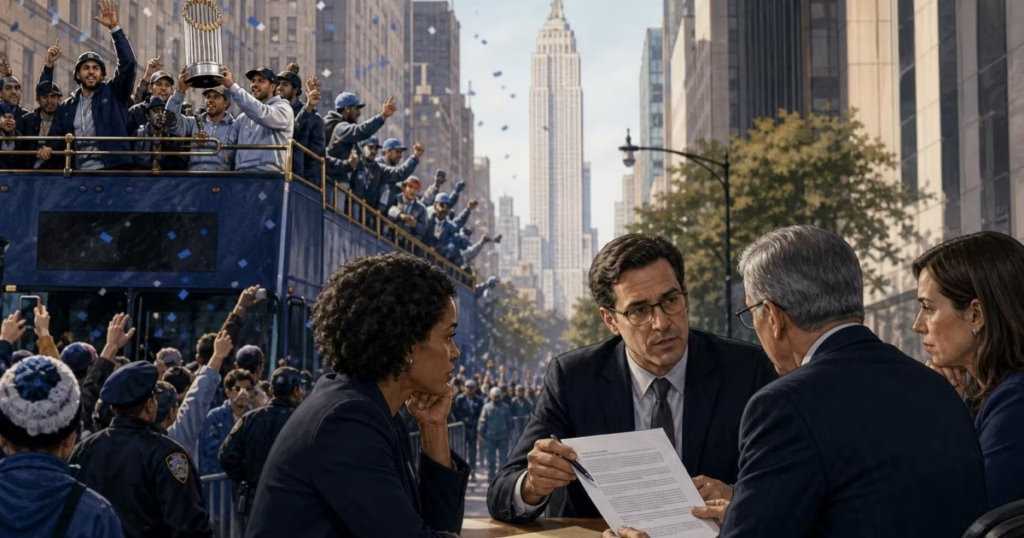
New York City hosted a significant championship parade on Thursday, marking a historic moment for sports fans as the Knicks celebrated their first NBA title since 1973. The event, which saw enthusiastic supporters gathering along the Canyon of Heroes, highlighted the broader implications of hosting such large-scale celebrations. Jalen Brunson, the Knicks guard, was honored with a key to the city, emphasizing the team’s achievement. This event raises important questions about the financial and regulatory aspects of organizing a championship parade, especially in a market as influential as New York.
The financial burden of hosting a parade in one of the world’s largest cities cannot be underestimated. Historically, the costs can range from $1 million to $4 million, depending on the scale and security needs. For instance, recent Super Bowl parades have cost cities over $2 million. In light of these expenses, there is an ongoing debate about whether municipalities should engage in event contracts to manage these costs more effectively. New York State Senator Joseph Addabbo Jr. has suggested that corporate sponsorships could help offset the financial demands. Companies like Kalshi and Polymarket have shown interest in sponsoring events, as seen in their previous engagements with sports venues and events.
In 2024, Crypto.com Derivatives North America (CDNA) proposed “Hometown Event Celebration Contracts” to the US Commodity Futures Trading Commission (CFTC), aiming to offer a financial instrument that reflects the economic impact of hosting large-scale events. The proposal included a notional value of $100 per contract, with specific trading limits. However, the CFTC requested a suspension of these contracts, leading to their withdrawal. This highlights the regulatory complexities faced by financial derivatives associated with sports events.
The concept of block trades in prediction markets has emerged as a potential tool for municipalities and large institutional players to hedge financial risks associated with hosting events. These transactions are typically reserved for entities with significant financial resources, such as hedge funds. However, their application to municipal events remains uncertain, especially given the regulatory restrictions and ethical considerations surrounding sports-event contracts.
Kalshi’s collaboration with Game Point Capital, a sports insurance broker, underscores the evolving landscape of risk management in sports events. While traditional reinsurers like Lloyd’s of London have been cautious in underwriting such contracts, prediction markets offer an alternative by fostering competition and transparency in pricing. This shift could potentially challenge established insurance markets, as exchanges provide a more dynamic environment for managing risks associated with sports events.
The broader regulatory debate around sports-event contracts centers on whether these financial instruments serve a legitimate economic purpose or merely constitute a form of wagering. Figures like former CFTC commissioner Brian Quintenz have argued for the economic relevance of such contracts, likening them to traditional commodities trading. However, differing opinions persist, as evidenced by recent legal challenges and regulatory reviews.
As for New York City’s recent parade, major sponsors were secured to support the event, although it remains unclear whether prediction market operators sought to participate. The city’s planning and budget for the parade have not been fully disclosed, adding to the complexity of assessing the financial strategies employed.
Looking ahead, the implications of these discussions could shape the future of how municipalities plan and fund public celebrations. The regulatory landscape for event-related financial instruments continues to evolve, with potential adjustments looming as the industry seeks to balance innovation with compliance. As cities and companies navigate these challenges, the focus will likely remain on developing sustainable methods to manage the financial and logistical aspects of large-scale public events.
Topics: Payments · Prediction Markets · New York · Crypto Gambling · Gambling Regulation
Looking for somewhere to play? Browse our current no deposit bonus listings, with verified codes and the full wagering terms for each offer.