

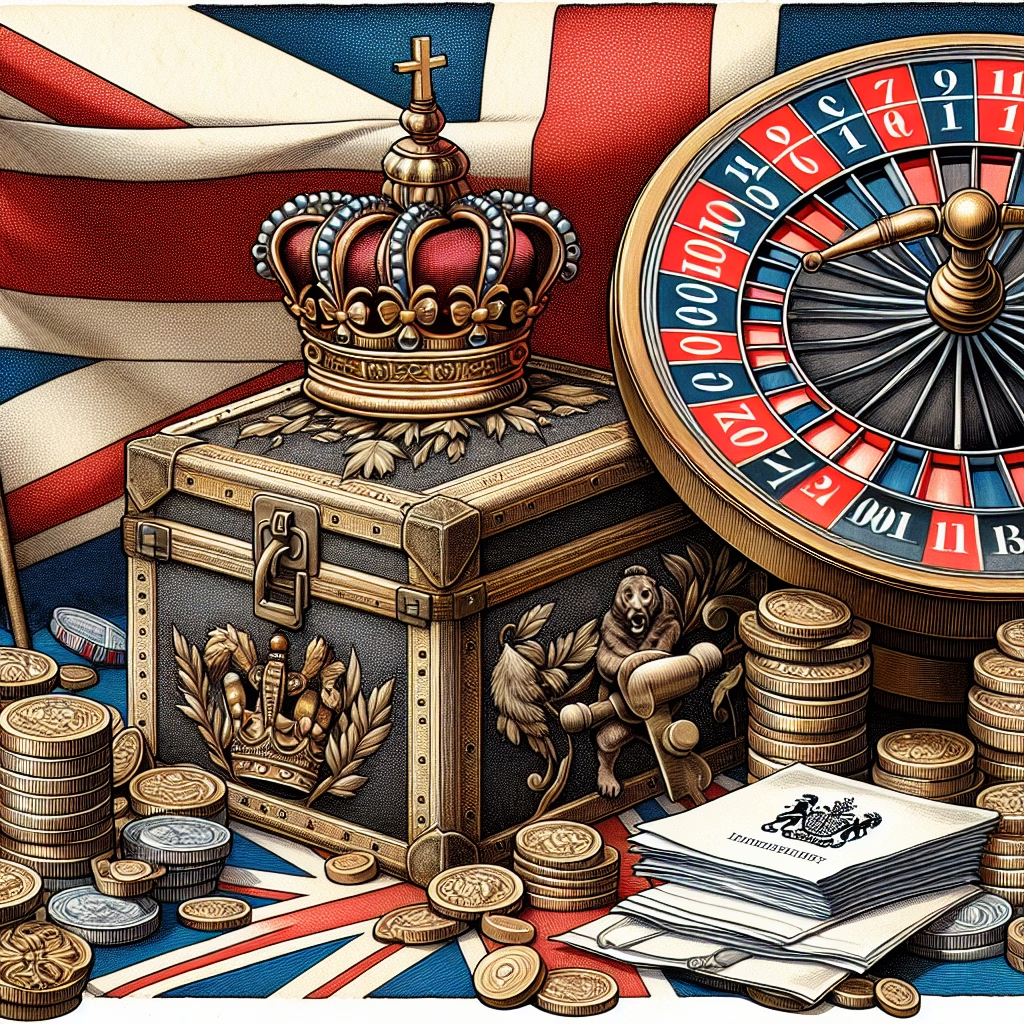
The UK government is poised to increase taxes on gambling operators, as Chancellor Rachel Reeves indicated at the recent Labour Annual Conference. During an interview with ITV, Reeves suggested that the next budget would ensure that gambling companies contribute their fair share to the economy. This move comes amid efforts to reduce government borrowing and secure additional funds for broader plans.
While Reeves did not specify the exact nature of the potential tax hike, she expressed a belief that gambling firms ought to pay more. “I do think there’s a case for gambling firms paying more,” she noted, adding that although gambling contributes significantly to the economy, it should come with a fair tax burden.
The government aims to provide further clarity in the autumn budget announcement scheduled for 26 November. This possibility of increased taxes has been a topic of discussion throughout 2025, particularly since the April proposal to implement a single tax rate for all remote gambling, replacing the existing multi-tier system.
This proposal, however, has faced criticism for its potential repercussions. Concerns have been raised about the impact of a unified tax regime on issues such as gambling-related harm and the viability of the horse racing sector, which heavily depends on betting revenues.
Smaller operators fear that additional taxes could drive them out of business and push consumers towards unregulated black market options, seeking cheaper alternatives. A group of over 100 Labour MPs also voiced their opposition to a single tax rate, advocating instead for a targeted levy specifically on online gambling operators active in the UK.
The MPs warned that a uniform tax could eliminate incentives for lower-risk gambling products and behaviors, thus undermining public health objectives aimed at reducing gambling-related harms. They pointed to the Social Market Foundation’s suggestion of increasing the Remote Gaming Duty from 21% to 50%, aligning the UK with other jurisdictions where online gambling tax rates are significantly higher.
Despite the calls for increased taxation, industry bodies have strongly opposed the proposals. The Betting and Gaming Council (BGC) criticized the higher tax plans as “short-sighted,” arguing that such measures could harm the industry. BGC CEO Grainne Hurst expressed sympathy for the government’s need for revenue but cautioned against a hasty policy that could degrade the appeal of regulated gambling, potentially steering customers towards unregulated markets.
This potential tax increase would be in addition to the new statutory levy that came into effect on 6 April. Currently, operators pay varying tax rates based on Gross Gaming Yield (GGY), which differ by the types of gambling offered and whether operations are online or land-based. Levy rates range from 0.1% for most land-based activities to 1.1% for online casino operations.
The Gambling Commission has issued warnings to operators about compliance with statutory levy rules, emphasizing that failure to adhere, including making timely payments, could result in license revocation.
From an economic perspective, increasing taxes on gambling is seen as a method to address the UK’s fiscal challenges. With government borrowing levels needing reduction, tapping into the profitable gambling sector is viewed as a pragmatic step. However, this strategy is not without its risks. Over-taxation could stifle innovation and competitiveness within the sector, leading to unintended consequences such as heightened black market activity.
Proponents of the tax increase argue that it will ensure gambling companies contribute proportionately to the public coffers, reflecting their significant economic benefits. Critics, however, contend that an overly aggressive tax regime could diminish the sector’s capacity to thrive.
Ultimately, the debate over gambling taxation underscores the challenge of balancing fiscal responsibility with economic vitality. As the UK continues to navigate its financial landscape, the government must weigh the immediate benefits of increased tax revenues against the long-term health and sustainability of the gambling industry. The outcome of this debate will likely set a precedent for how similar sectors are taxed in the future, making the upcoming budget announcement a pivotal moment for industry stakeholders and policymakers alike.
Topics: Illegal Gambling · Licensing · United Kingdom · Land-Based Casinos · Gambling Taxes · Financial Results
Looking for somewhere to play? Browse our current no deposit bonus listings, with verified codes and the full wagering terms for each offer.
 4.5/5
4.5/5