
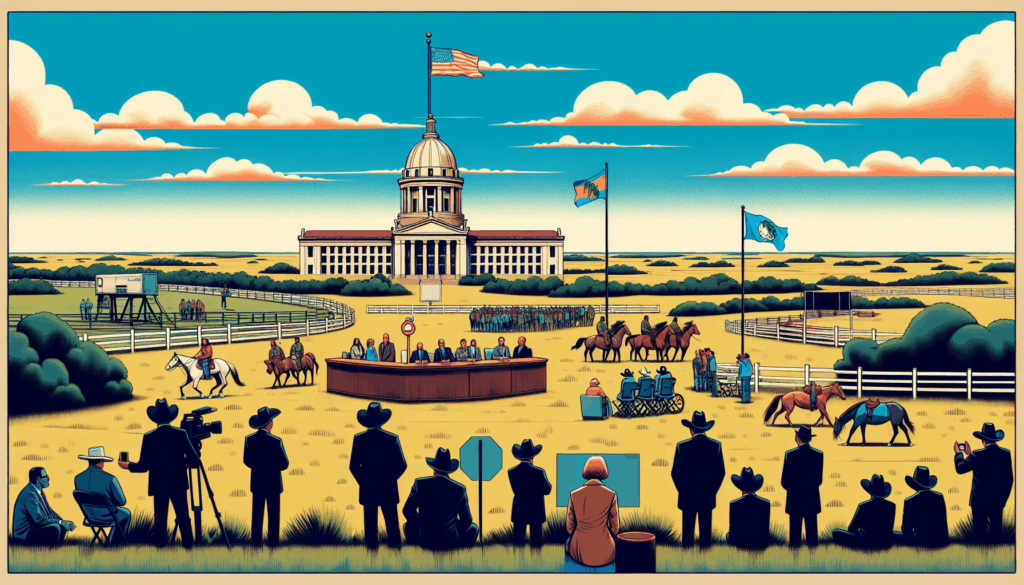
Oklahoma Governor Kevin Stitt, in his final State of the State address on Monday, avoided directly mentioning sports betting but targeted tribal sovereignty, a pivotal issue in ongoing legal discussions. The state’s new legislative session commenced the same day. As Stitt approaches the end of his second and final term in 2026, he emphasized the importance of “equal rights for all,” which has significant implications for the state’s gambling framework. “Many of us have criticized the DEI programs under the Biden administration, yet remain silent when it comes to different sets of laws for Native Americans,” Stitt stated, highlighting the need for consistent legal standards. The governor’s remarks come at a time when tribal exclusivity in gambling is a major point of contention, especially given the tribes’ significant contribution to state revenue through existing compacts.
Under current agreements, Oklahoma tribes enjoy exclusive rights to gambling operations, having contributed $210 million to the state in 2024 as part of these deals. Governor Stitt has consistently opposed extending this exclusivity to include sports betting, threatening to veto any sports betting legislation that does so. This stance has led to tensions, with potential legal ramifications if gaming compacts are disrupted. Representative Ken Luttrell, a proponent of sports betting legislation, warned last fall that any compromise in these agreements could lead to legal challenges and uncertainty within the state’s casino industry, impacting its economic contributions.
The ongoing legislative efforts to introduce sports betting in Oklahoma have seen lawmakers revisit bills from the previous year. Luttrell’s proposals, HB 1047 and HB 1101, successfully passed the House and Senate committee stages but stalled in the Senate. Developed in collaboration with the Oklahoma Indian Gaming Association (OIGA), these bills aim to amend tribal compacts to incorporate sports betting. HB 1047 proposes a regulatory framework, while HB 1101 includes a contingency to refer the matter to voters should the governor veto it, a strategy reminiscent of the 2003 state lottery establishment. Senator Bill Coleman, who co-authored these bills, has signaled progress in negotiations between the tribes and the Legislature.
Additionally, SB 585, which Coleman and Luttrell also authored, proposes granting an extra sports betting license to the NBA’s Oklahoma City Thunder, a measure that has passed the Senate. The Thunder organization has actively lobbied for inclusion, reflecting the broader commercial interests at play.
Despite these legislative movements, skepticism remains about achieving consensus. House Appropriations and Budget Committee Chairman Trey Caldwell expressed doubts about bridging the gap between tribal leaders and the governor during this session. The strained relationship between these entities poses significant barriers to advancing sports betting legislation.
Governor Stitt, while advocating for sports betting, envisions a model that includes commercial operators. His previous attempt in 2020 to legalize sports betting through tribal agreements was met with opposition from other tribes and was ultimately invalidated by the state judiciary. In 2023, Stitt proposed a model allowing commercial online operators, with tribes operating in-person sportsbooks. He reiterated this proposal as legislative discussions intensified last year. Despite setbacks, Stitt remains undeterred by the legislature’s inaction and anticipates that tribes may wait until his departure from office to pursue favorable terms.
As Oklahoma evaluates its sports betting prospects, the outcome of these legislative efforts will hinge on navigating the complex interplay of tribal sovereignty, state revenue considerations, and the governor’s commercial inclinations. The next steps involve continued negotiations and potential legislative maneuvers to gain sufficient support, potentially leading to a veto-proof majority. The development and implementation of any sports betting framework will require careful management of regulatory and commercial interests to ensure a balanced and equitable approach to gambling expansion in Oklahoma.
Topics: India · Licensing · Sports Betting · Product Launches · Financial Results · Gambling Regulation
Looking for somewhere to play? Browse our current no deposit bonus listings, with verified codes and the full wagering terms for each offer.
 4.5/5
4.5/5