

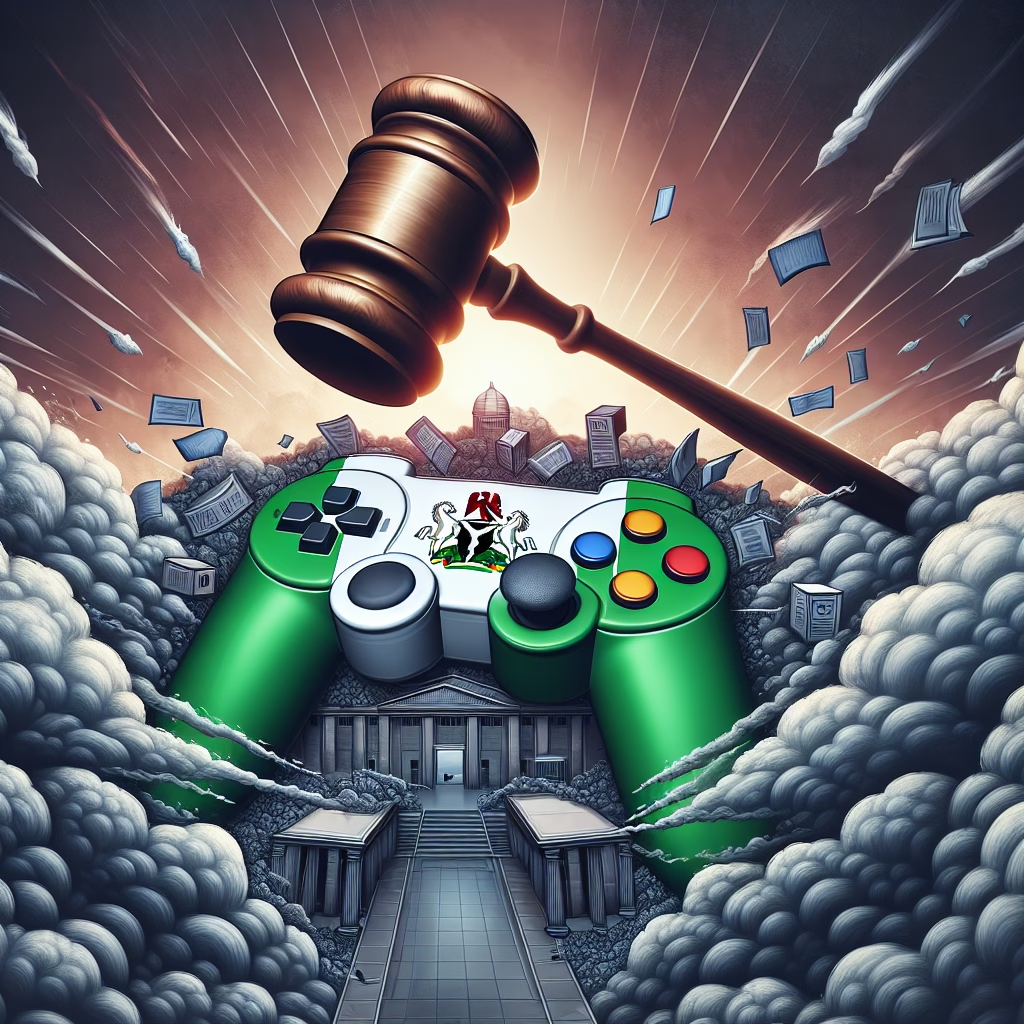
A recent media briefing by the Coalition of Good Governance (CCG) has cast a harsh spotlight on Nigeria’s National Assembly and its controversial decision to revisit the Nigeria Central Gaming Bill. This push has been characterized by CCG as a “voyage of legislative rascality, recklessness, and lawlessness,” marking an intense escalation in the ongoing debate over federal versus state control of gaming laws in Nigeria.
The controversy dates back to July when the Federation of State Gaming Regulators of Nigeria (FSGRN) voiced strong opposition to the bill, which proposes to place all games of chance under federal jurisdiction. This approach mirrors the now-invalid National Lottery Act of 2005, which was struck down by the Supreme Court in November 2024. The court ruled decisively that state legislative assemblies, rather than the federal government, should oversee lotteries and similar games of chance.
Despite this ruling, the House of Representatives is adamant about advancing the Nigeria Central Gaming Bill, which is seen by many as a thinly veiled attempt to circumvent the Supreme Court’s decision. This has drawn significant criticism, with detractors accusing the legislative body of attempting to undermine the authority of the highest court in the land.
During a recent conference, Nelson Ekujumi, a leader within the CCG, expressed bewilderment at the National Assembly’s actions. He remarked, “Once the court has made a decision on a subject, it becomes final and binding on all persons and authorities – including the executive and the legislature. We are at a loss to try and rationalize why the National Assembly is attempting to illegally and unconstitutionally rewrite the law.” Ekujumi’s comments underscore the gravity of the situation, warning that proceeding with the bill would constitute a blatant defiance of judicial authority and an affront to the rule of law.
Echoing these sentiments, Obinna Akpuchukwu, a gaming law expert and senior partner at Allen & Marylebone, criticized the bill as both “unconstitutional” and “unfounded.” He highlighted that the current attempt to legislate a central gaming authority fails to recognize the comprehensive coverage of gaming activities under the nullified National Lottery Act. “The Central Gaming Bill, if passed into law, will be unconstitutional,” Akpuchukwu stated, pointing out that the bill’s intent to regulate online and remote gaming activities is redundant as these activities were already encompassed within the previous act’s definition of “lottery.”
Akpuchukwu further elaborates that the Supreme Court’s decision in the case of Attorney General of Lagos State & Ors vs Attorney General of the Federation & Ors (2025) was clear: gaming and lottery fall under Residual Matters, which are to be regulated by state governments. This means that any federal attempt to control these activities is inconsistent with the constitutional framework that reserves such powers to the states.
However, not everyone agrees with this interpretation. Proponents of the Central Gaming Bill argue that a central regulatory body is necessary to create uniform standards and regulations across the country, particularly with the rise of online and remote gaming platforms. They contend that without federal oversight, there could be a risk of disparate and conflicting state regulations, potentially complicating enforcement and compliance for operators and participants alike.
Yet, as Akpuchukwu suggests, if the National Assembly truly believes in the necessity of such a regulatory body, the appropriate course of action would be to initiate a constitutional amendment process. This would involve adding online gaming to the Exclusive Legislative list, thereby granting the federal government the requisite authority. “The current attempt to enact the Central Gaming Bill into law will only be a wasted effort,” Akpuchukwu concludes, predicting that the Supreme Court would likely invalidate the bill just as it did its predecessor.
This ongoing legal and legislative tussle highlights a broader tension between state and federal powers in Nigeria’s gaming industry. On one hand, there’s a push for centralized control that proponents argue could streamline operations and enhance regulatory oversight. On the other hand, there’s a steadfast commitment to uphold the Supreme Court’s ruling and preserve the constitutional rights of states to govern their own gaming activities.
As the debate continues, stakeholders from all sides will be watching closely to see if the National Assembly will heed the Supreme Court’s decision or push forward with the bill, risking further legal challenges and political fallout. The outcome of this legislative endeavor could have long-lasting implications not only for Nigeria’s gaming industry but also for the broader relationship between state and federal authorities in the country.
Topics: Nigeria · Gambling Regulation · Enforcement
Looking for somewhere to play? Browse our current no deposit bonus listings, with verified codes and the full wagering terms for each offer.
 4.5/5
4.5/5