

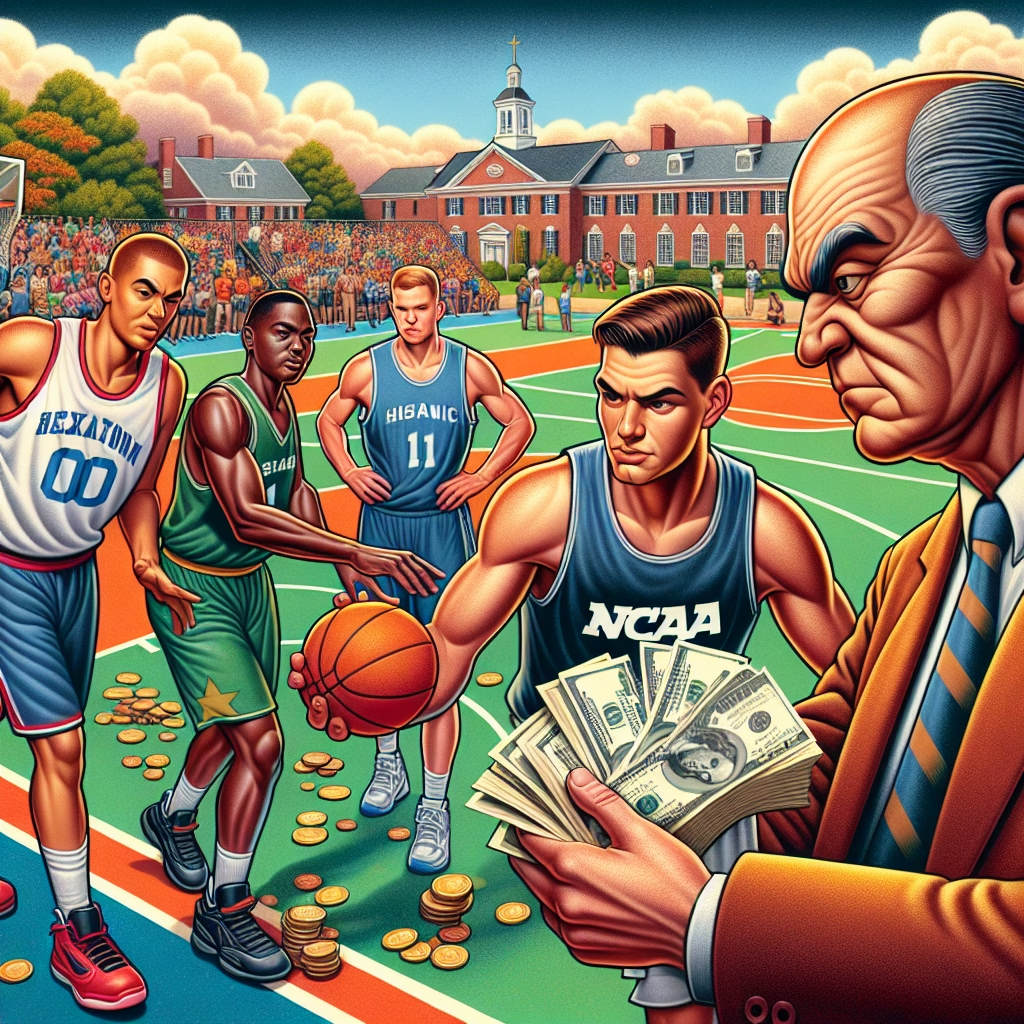
In a significant crackdown amidst a series of controversies plaguing the sports betting landscape, the NCAA has permanently banned three college basketball players for their involvement in gambling activities. This stern action followed a thorough investigation into allegations of match-fixing during the 2024-25 Mountain West Conference season.
The NCAA Committee on Infractions revealed that at least five games were compromised, with the implicated players betting on their own and each other’s matches or facilitating such actions. Mykell Robinson, Steven Vasquez, and Jalen Weaver, who were the focus of this probe, have been expelled from their teams and are no longer students at the institutions concerned.
Robinson and Weaver, who played for Fresno State, along with Vasquez, a former Fresno State guard who transferred to San Jose State, were implicated. The resolution of these cases was achieved through negotiated settlements in collaboration with the athletes’ schools, as outlined by NCAA’s procedural guidelines.
Evidence surfaced highlighting communication between Robinson and Vasquez, who were roommates at Fresno State during the 2023-24 academic year. Vasquez, upon moving to San Jose State, continued to engage with Robinson regarding betting activities. Prior to Fresno State’s match against Colorado State on January 7, 2025, Vasquez allegedly collaborated with Robinson to wager on specific performance metrics such as points, rebounds, and assists.
Financial transactions traced by investigators showed Robinson’s mother sending money to Vasquez via Apple Pay to facilitate a $200 bet on Robinson’s performance. Despite a lackluster game from Robinson, the bet yielded significant returns, leading to a financial transaction of $1,625 back to Robinson, inclusive of winnings.
When approached by NCAA enforcement staff, Vasquez chose not to cooperate, which led to his release from the San Jose State basketball program. His refusal to engage further with the investigation was confirmed on August 5th.
Jalen Weaver, another key figure in the investigation, was found to have placed bets on his performances. He was reported to have wagered on a multi-leg parlay involving himself, Robinson, and another player from a different college. Despite the ethical breach, Weaver’s wager proved successful, earning him $260. In a candid interview, Weaver admitted his mistakes but emphasized he never aimed to undermine his team’s success or bet against them.
This investigation is separate from a broader probe into college basketball betting irregularities currently underway by federal authorities in Pennsylvania, which suggests a wider issue extending beyond the Mountain West Conference. The Eastern District of Pennsylvania has been expanding its inquiry into potential point shaving, with scrutiny on various institutions across the Southern United States. The implications of this investigation could be far-reaching, potentially resembling the scale of investigations not seen since the PASPA ruling in 2018, which legalized sports betting across many states.
The NCAA’s decisive actions in banning Robinson, Vasquez, and Weaver send a clear message about the consequences of engaging in activities that compromise the integrity of college sports. However, this case also brings to light the growing challenges faced by collegiate sports in managing the impacts of legal and illegal sports betting. While organizations continue to express a strict stance on upholding fair play, the complexities of enforcement and the allure of quick financial gains create a challenging environment.
Despite the clear violations, there exists a sentiment that the players involved are also victims of a system struggling to adapt to the rapidly evolving sports betting landscape. Some argue that greater educational initiatives on the risks and regulations surrounding sports betting could prevent future violations. Others suggest more stringent monitoring and support systems to help athletes navigate these pressures.
Ultimately, the NCAA’s current efforts highlight the need for ongoing vigilance and adaptation to ensure the integrity of college sports remains intact. As betting becomes more ingrained within the sporting culture, safeguarding the future of amateur athletics must remain a priority for all stakeholders involved.
Topics: Pennsylvania · Illegal Gambling · Sports Betting · Enforcement
Looking for somewhere to play? Browse our current no deposit bonus listings, with verified codes and the full wagering terms for each offer.
 4.5/5
4.5/5