
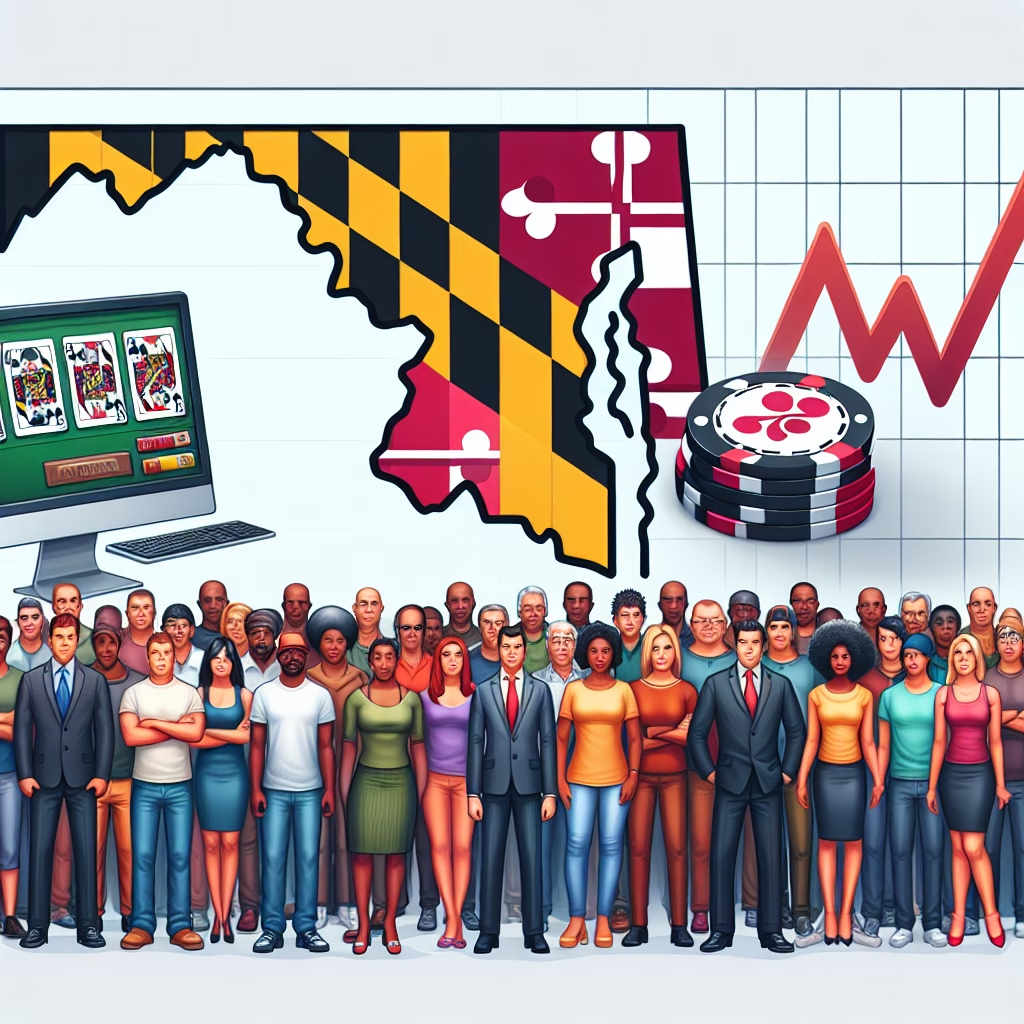
In recent years, Maryland has been a focal point in the debate over iGaming expansion, as legislative efforts continue to face formidable public resistance. A new poll by Lake Research Partners reveals that 71% of Maryland residents oppose the expansion of online casinos. This survey, commissioned by the National Association Against iGaming (NAAiG), highlights the challenges facing proponents as they gear up for another push in 2026.
The poll results come after two years of legislative attempts to legalize iGaming in Maryland. A notable effort included a House bill in 2024 that progressed to the Senate, only to encounter robust opposition. NAAiG, spearheaded by The Cordish Companies, stands as a prominent adversary in these debates. The coalition includes other influential entities such as Churchill Downs Inc, Jack Entertainment, and Gaming & Leisure Properties, alongside various unions and municipalities.
According to Jason Gumer, an NAAiG board member and executive at Monarch Casino & Resort, the findings demonstrate a clear resistance once residents grasp the implications of iGambling. He noted that policymakers should heed the concerns expressed by voters about the potential risks to children and families.
The survey, conducted from September 15-18, involved 650 registered Maryland voters through phone and text-to-online methods. With a margin of error of 3.8%, the data was adjusted for gender, age, race, region, education levels, and political affiliation. Initially, 17% of respondents viewed online casinos favorably, while a sizable 64% had no opinion, with nearly half unaware of the issue. The opposition figure rose to 71% after respondents were informed about the nature of online casinos, emphasizing constant gambling access via mobile devices.
Efforts to Expand Gambling in Maryland
Maryland Delegate Vanessa Atterbeary and Senator Ron Watson have been at the forefront of efforts to introduce iGaming legislation in the state’s past two legislative sessions. In 2024, Atterbeary succeeded in navigating her bill through the Assembly, only for it to falter in the Senate.
She candidly expressed during a hearing that Maryland is lagging in the iGaming field. Atterbeary emphasized, “At this point, we’re not being left behind; we are behind, quite frankly.”
The proposed bills have been subject to extensive testimony, encountering staunch opposition primarily based on fears of revenue cannibalization from traditional casinos. A report by The Innovation Group for the Maryland Lottery and Gaming Control Commission projected a 10% decline in brick-and-mortar casino revenue if iGaming were expanded.
Senator Watson reassured during hearings that he would collaborate with unions to protect jobs, stating that any casino cutting jobs post-iGaming implementation would be acting out of greed, not financial necessity.
While the online casino debate raged, lawmakers also considered prohibiting sweepstakes casinos. Although Senate Bill 860 aimed at banning such operations failed in the House, the Maryland Lottery and Gaming Control Agency took decisive action, issuing cease-and-desist letters to multiple entities, including Virtual Gaming Worlds.
Learning from Maryland’s iGaming Journey
At the 2024 summer meeting of the National Council of Legislators from Gaming States, Watson reflected on the year’s legislative efforts. He acknowledged the strategic preparation but suggested that the approach could have been refined for better outcomes.
Even if the legislation had succeeded in the previous year, it would have necessitated a public vote slated for November 2026. Watson emphasized that legalizing iGaming in Maryland hinges on public education. The recent opposition poll underscores this requirement, reinforcing his belief that a comprehensive campaign approach is necessary.
“We need to treat it like a campaign,” Watson advised. He likened the legislative introducer to a quarterback, emphasizing the need for a cohesive team effort to achieve success.
Countering the Opposition
Despite the substantial opposition, there remains a perspective that digital expansion could modernize and invigorate Maryland’s gaming industry. Proponents argue that adapting to changing consumer preferences and technological trends is crucial for staying competitive. Some experts point out that states which have embraced iGaming have seen positive fiscal benefits, which could potentially be replicated in Maryland.
Economic context is also pivotal. The broader gambling industry has been evolving with technological advancements, with many consumers favoring the convenience of online platforms. States like New Jersey and Pennsylvania have successfully integrated iGaming, reaping substantial tax revenues and bolstering their local economies. Maryland’s traditional casinos could potentially harness similar benefits from a well-regulated online casino environment.
However, opponents remain steadfast, insisting that the social costs outweigh potential economic gains. There are concerns about increased problem gambling and the potential for online platforms to undermine community values. Moreover, local unions fear that the rise of iGaming could lead to job losses in the traditional casino sector.
Ultimately, Maryland’s journey toward iGaming legalization remains fraught with challenges. As the debate continues, balancing economic incentives with social responsibilities will be critical. Lawmakers will need to consider these divergent views carefully as they shape the future of gaming in the state. With the public’s overwhelming opposition evident, the path to iGaming legalization will require strategic navigation, robust public engagement, and possibly a reimagined approach to the issue.
Topics: Sweepstakes Casinos · Maryland · Pennsylvania · New Jersey · Gambling Taxes · Responsible Gambling
Looking for somewhere to play? Browse our current no deposit bonus listings, with verified codes and the full wagering terms for each offer.
 4.5/5
4.5/5