
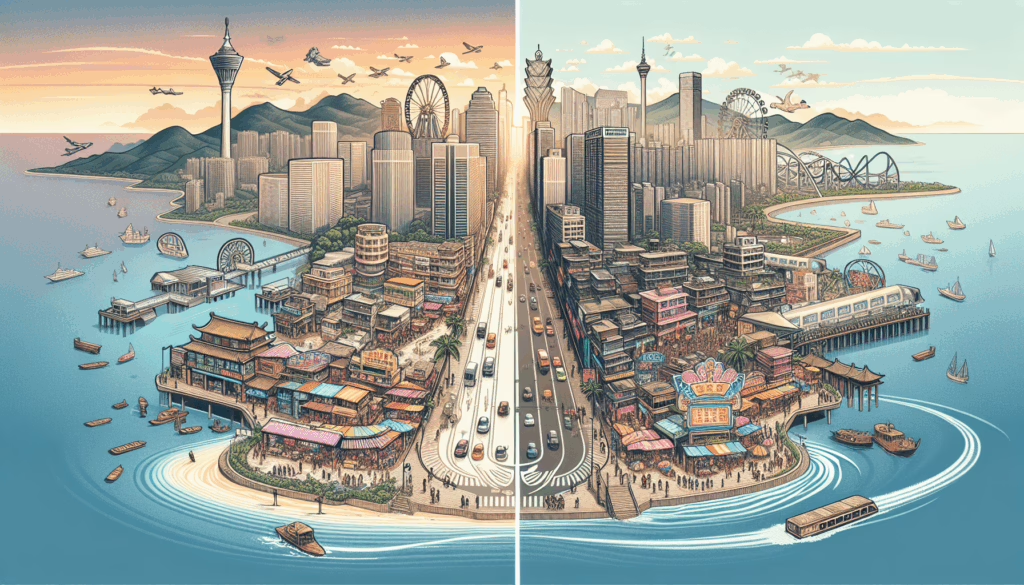
Macau’s government-mandated shift towards establishing itself as a broad-based travel and leisure destination, akin to Las Vegas, is encountering significant obstacles. This transition, aimed at reducing dependency on gaming revenues and integrating non-gaming attractions, is crucial for Macau’s six casino operators. These operators are required to invest $13.6 billion in non-gaming projects and explore international markets as stipulated in their concession agreements valid until 2032. Despite the mandate, Macau’s gaming revenues and casino profits are still trailing behind the 2019 figures, hindered by the pandemic’s aftermath and a decline in VIP junket operations, which previously accounted for two-thirds of the gross gaming revenue.
The gaming revenue gap persists, as Macau’s visitor numbers almost match the record 39.4 million in 2019, yet gross gaming revenue is down by 16%, representing a $5.4 billion shortfall. The shift from high-spending VIP clients to mass-market visitors, who spend more cautiously, has significantly impacted profitability, says Andy Choy, a veteran in Macau’s gaming sector. Mary Mendoza, managing director of Platinum Strategic Consulting Group, notes that while mass gaming typically yields higher margins than VIP gaming, the overall profitability is diluted due to intensified competition and higher reinvestment and promotional costs. A structural recalibration, rather than a cyclical recovery, seems necessary.
Macau’s path to diversifying its revenue streams is complex. Although Las Vegas serves as a role model in successfully integrating non-gaming revenues such as entertainment, dining, and other leisure activities, Macau’s heavy reliance on premium gaming remains a barrier. Currently, Sands China, hailed as a model for diversification within Macau, reported that only 20% of its third-quarter revenue came from non-gaming activities. Vitaly Umansky, a senior analyst at Seaport Research, emphasizes that Macau is fundamentally different from Las Vegas, as its economy heavily relies on gaming, particularly premium player gaming, which makes up over 70% of EBITDA.
The disparity in economic conditions between China and the United States also poses challenges. China’s per capita GDP significantly lags behind the United States, affecting the affordability of non-gaming leisure activities. Geopolitical tensions and the economic impact of the recent pandemic have further strained discretionary consumer spending, as noted by Choy. This economic environment limits the pool of Chinese customers who can afford a leisure trip to Macau, especially when other international destinations offer similar or better attractions.
Within Macau, the focus on high-end gaming has spurred what Umansky terms the “premiumisation of Macau.” Luxurious integrated resorts dominate Cotai, contributing to a highly concentrated luxury hospitality sector. Notable developments include Sands China’s transformation of Sands Cotai Central into The Londoner, featuring themed hotels, and Galaxy Macau’s addition of high-end suites at its Raffles and Capella hotels, reflecting an emphasis on exclusivity and luxury.
Despite substantial investments in luxury accommodations, Macau faces another significant hurdle: a lack of sufficient hotel rooms. Compared to Las Vegas’ 150,000 hotel rooms, Macau offers fewer than 50,000, often reaching full capacity on weekends. This limitation constrains the region’s ability to attract convention and MICE (meetings, incentives, conferences, and exhibitions) business, which is vital for evolving into a comprehensive leisure destination. Expanding hotel inventory is crucial for Macau to enhance its non-gaming appeal and compete in the international market, asserts Umansky.
Macau Government Tourism Office Director Maria Helena de Senna Fernandes acknowledges the need for more hotel rooms but suggests leveraging nearby Hengqin Island’s accommodations to complement Macau’s capacity. The strategic development of Hengqin, with its hotels and transport links, could alleviate some pressure from Macau’s hotel constraints and support the region’s growth as a leisure destination. However, the reliance on Hengqin raises questions about whether it will truly drive non-gaming spending within Macau.
Moreover, Macau’s entertainment and attraction offerings need further development to match the diverse array of activities available in Las Vegas. Efforts are underway, with initiatives such as Melco’s revamped House of Dancing Water, Studio City’s water park, and MGM Macau’s Poly Museum incorporating advanced technology to attract visitors. However, the lack of a unified strategy and coordination among stakeholders hinders the creation of a compelling, cohesive destination marketing approach.
A critical factor in Macau’s transition to a diversified leisure destination is the absence of a centralized entity to manage and promote non-gaming initiatives effectively. Umansky suggests establishing an organization similar to the Las Vegas Convention and Visitors Authority to oversee destination marketing and collaborate with stakeholders in enhancing Macau’s appeal. Without strategic management and coordination, the substantial non-gaming investments mandated by the government may fall short of achieving the desired transformation.
Looking ahead, Macau’s journey to becoming a diversified leisure and travel hub requires concerted efforts and strategic planning. Operators and stakeholders must collaborate with government authorities to address infrastructure limitations and enhance the overall visitor experience. As Macau aims to replicate the success of Las Vegas, it will need to balance gaming reliance with robust non-gaming offerings, ensuring a sustainable and attractive market for both operators and visitors.
Topics: China · Executive Appointments · Macau · Las Vegas · Financial Results
Looking for somewhere to play? Browse our current no deposit bonus listings, with verified codes and the full wagering terms for each offer.
 4.5/5
4.5/5