

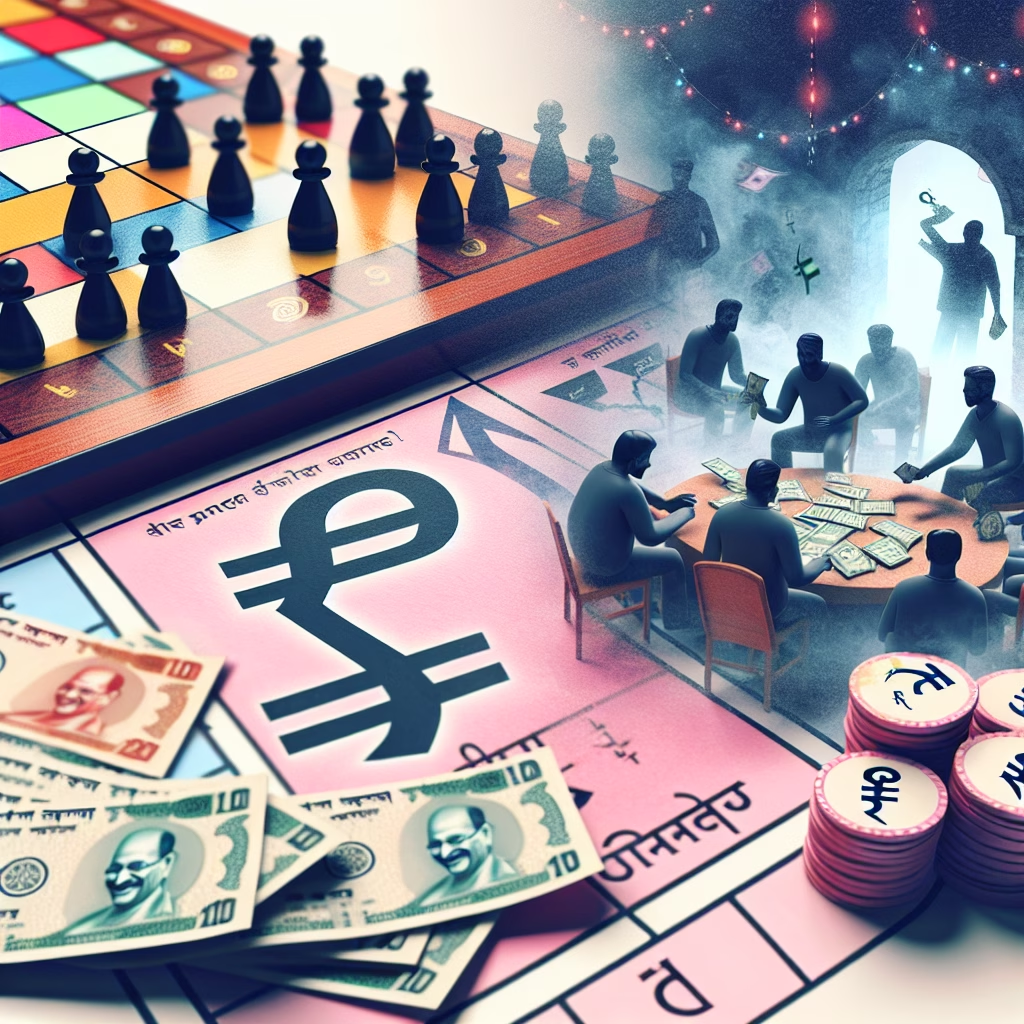
India’s move to ban real-money online gambling is causing upheaval in a billion-dollar industry, as on August 19, lawmakers in the Lok Sabha introduced the Promotion and Regulation of Online Gaming Bill (2025). Just two days later, the Rajya Sabha approved the bill with minimal consultation. The legislation now awaits the signature of Indian President Droupadi Murmu, who has already endorsed the plan, making his approval a mere formality.
The bill aims to eliminate gambling websites and apps that offer games requiring users to pay fees or deposit money with the hope of winning cash. Proponents argue that the ban is necessary to curb the risks associated with online gambling, such as addiction, mental health issues, and increasing debt. They also express concerns about the industry’s rapid expansion, highlighting potential links to financial fraud, money laundering, and even the funding of terrorism.
Federal IT Minister Ashwini Vaishnaw emphasized the government’s responsibility to address these “social evils” through decisive action. However, critics argue that the ban will not mitigate these risks but rather push the industry into the shadows where regulation is absent and consumer protections are minimal.
A blog post by gaming law firm Segev LLC pointed out that the legislation, while presented as a forward-thinking initiative, actually contradicts global trends towards licensure and regulation. These models often incorporate responsible gaming measures and consumer safeguards. According to Segev, a sweeping prohibition sidesteps these proven regulatory frameworks, potentially driving gambling activities underground and making consumer harm more difficult to prevent.
The global sports industry has already felt the repercussions of the impending ban. Dream11, a major iGaming provider, withdrew its sponsorship of the Board of Control for Cricket in India (BCCI), which governs the nation’s most beloved sport. This sudden exit leaves Team India without a sponsor for the upcoming Asia Cup, scheduled for September 9-28 in Abu Dhabi, prompting BCCI to search for new sponsors. The situation has also resonated internationally, as Dream11’s withdrawal led to the suspension of the European Cricket League last week.
The ban could also have significant economic ramifications, potentially resulting in job losses and diminished investment. In a joint statement, the All India Gaming Federation, the eGaming Federation, and the Federation of Indian Fantasy Sports labeled the ban as a potential “death knell” for the thriving digital skill gaming sector. They urged lawmakers to reconsider, stressing the impact on millions of entrepreneurs, developers, and professionals in India’s burgeoning industry. The blanket prohibition, they argue, threatens a legitimate, job-creating sector and could cause considerable harm to Indian users and citizens.
RegTechTimes, a regulatory news outlet, also weighed in, suggesting that the ban could inadvertently exacerbate the issue of money laundering. Offshore casinos might become a conduit for illicit money transfers, fostering a shadow economy that eludes regulatory oversight. Funds could flow in and out of India without scrutiny, some possibly originating from criminal activities, thus making the situation worse than before.
The law, while banning advertising and promotion of real-money gambling, does permit esports and online social games as long as they do not involve monetary stakes. This distinction leaves some room for digital gaming innovation, yet the broader implications on the industry remain a significant concern.
Supporters of the ban maintain that addressing the potential for financial and social harm outweighs the economic benefits of the gaming sector. They argue that the gambling industry’s contributions to the economy do not justify the risks posed to individuals and society at large. However, opponents warn that driving the industry underground could result in even greater social costs, as unregulated markets offer little in terms of player protection and consumer safety.
The debate over India’s real-money gaming ban highlights a broader global challenge: balancing regulation and innovation in burgeoning digital economies. As India grapples with this issue, other nations watch closely, recognizing that the outcome could influence regulatory approaches worldwide.
Observers note that India’s decision comes at a crucial time, with the digital economy evolving rapidly and offering both opportunities and challenges. The task ahead is to find a path that safeguards consumers while encouraging growth and innovation in a sustainable manner. As the situation unfolds, stakeholders from various sectors continue to voice their perspectives, hoping to shape a policy that aligns with India’s broader socio-economic goals.
The unfolding debate underscores a fundamental tension between regulation and freedom in digital spaces, a challenge that governments around the world must navigate as technology continues to advance. As India stands at this crossroads, the decisions made today could set the tone for the future of digital gaming and online economies, not just within its borders, but globally.
Topics: Gambling Advertising · United Arab Emirates · India · Payments · Esports Betting · Online Casino
Looking for somewhere to play? Browse our current no deposit bonus listings, with verified codes and the full wagering terms for each offer.
 4.5/5
4.5/5