

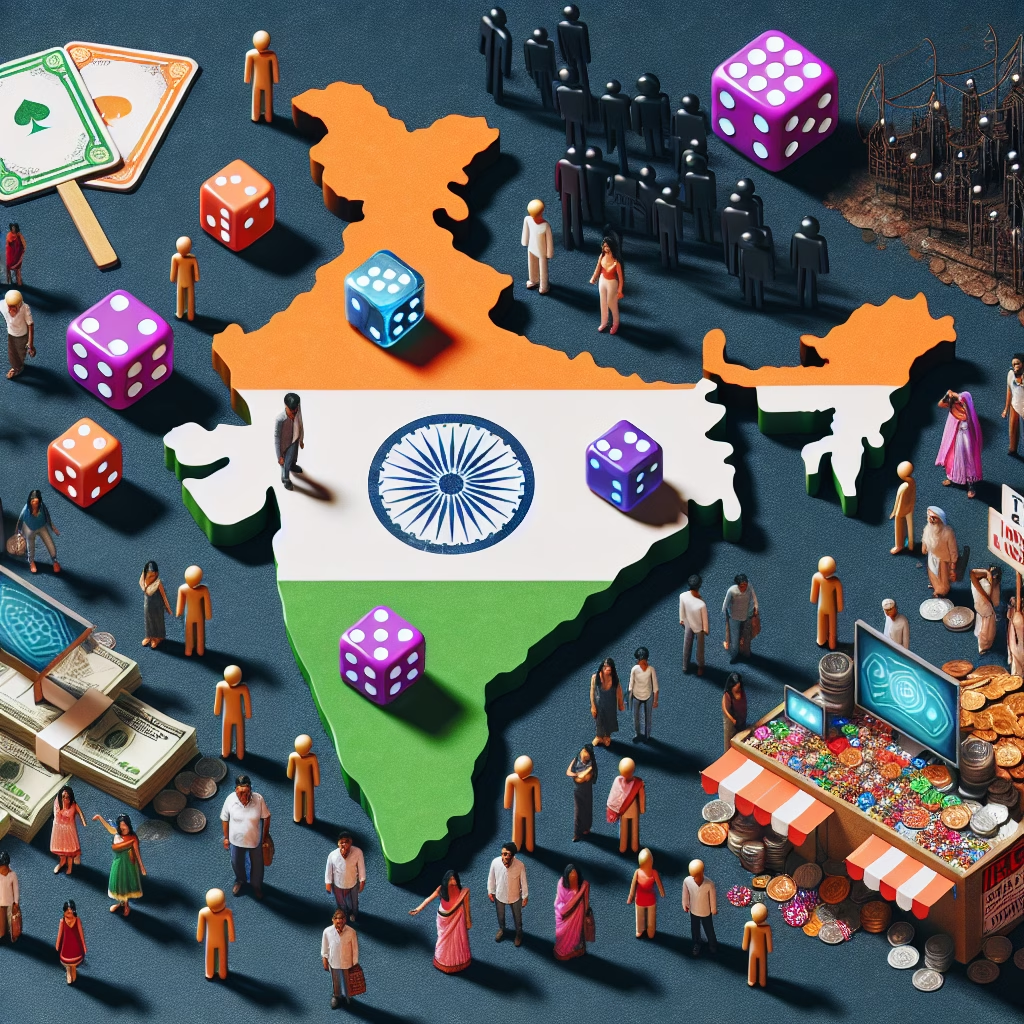
In August 2025, India’s parliament enacted a sweeping ban on real-money iGaming, a decision that has sparked considerable debate and concern across the nation. The newly passed 2025 Promotion and Regulation of Online Gaming Bill has made online gambling for cash illegal, prohibiting any kind of promotion or advertisement for such activities. It also restricts banks and payment services from facilitating transactions related to these cash games. The repercussions for violating these regulations are severe, with penalties including hefty fines and up to five years of imprisonment.
The driving force behind this legislative move is the alarming data suggesting that approximately 450 million people in India, about a third of the population, lose collectively $2.3 billion annually to these platforms. Proponents of the ban argue that it is a necessary measure to mitigate the financial risks associated with gambling. Ashwini Vaishnaw, the Indian Technology Minister, strongly criticized iGaming operators, accusing them of exploiting users with unrealistic promises of profit. He asserted that the legislation is designed to protect the public and avert a significant menace infiltrating society.
However, many experts and stakeholders in the industry argue that the law may inadvertently push Indian gamblers towards unregulated offshore sites, exacerbating the problem it aims to solve. Interviews conducted by Agence France Presse (AFP) with Indian players reveal a defiant attitude among regular bettors who are prepared to circumvent the ban through alternative means. “We have done this before and will do it again,” said one anonymous player, emphasizing a willingness to revert to previous methods of gambling.
The sentiment that the ban will drive Indian bettors to unauthorized sites is echoed by fantasy sports enthusiast Adarsh Sharma. He predicts a noticeable surge in offshore gambling activities as Indians turn to illegal platforms, leveraging technologies like virtual private networks (VPNs) and proxy credit cards to navigate around the restrictions. “A habit once formed cannot be broken easily,” Sharma remarked, likening gambling to an addiction that compels individuals to seek out avenues for wagering regardless of legal constraints.
The addictive nature of real-money games is precisely what concerns Minister Vaishnaw. In an August interview with ABP News, he highlighted the devastating financial and personal consequences faced by middle-class families, often culminating in tragic incidents. The law, he noted, also promotes the development of non-gambling alternatives such as esports and social games, aiming to offer healthier entertainment options.
Nonetheless, the enactment of the law has stirred constitutional debates. Indian gaming company A23 has challenged the legislation, labeling it as overly paternalistic. Legal experts, like Meghna Bal from the Esya Centre in New Delhi, suggest that further litigation might ensue. She argues that the law fails the constitutional test of proportionality, as Article 19(1)(g) of the Indian constitution safeguards the right to engage in any profession, trade, or business. Instead of protecting consumers, the law undermines compliant domestic companies, inadvertently creating a vacuum that illegal offshore businesses are likely to fill.
Rohit Kumar from Quantum Hub, a public policy firm, criticized the abrupt manner in which the bill was passed, arguing that it casts a shadow over India’s image as a reliable investment hub. “Regulation is necessary, but abrupt moves like this undermine India’s reputation as a stable, predictable investment destination,” he stated, advocating for clearer governmental communication regarding concerns.
The economic ramifications of the ban are substantial, particularly for the fantasy sports sector. Dream11, India’s top fantasy sports platform boasting 260 million users, has retracted a $43 million sponsorship agreement with the Board of Control for Cricket in India. While layoffs are not imminent, CEO Harsh Jain admitted the company is bracing for a drastic 95% revenue decline. Jain expressed dismay at the swift legislative process, noting that the industry was caught unprepared. He reflected on the missed opportunity for the industry to self-regulate more effectively, which might have prevented the current situation.
Jain acknowledged that the ban is likely to lead to a rise in black market activities. “Whenever something is banned, the black market usually grows,” he observed, pointing out that offshore betting firms are already courting Indian users with attractive discounts. Although the government promises stringent measures against such operators, Jain voiced skepticism over the feasibility of internet policing.
The divide between regulation proponents and critics underscores the complexity of addressing gambling-related challenges in India. While the legislation aims to safeguard citizens from the pitfalls of gambling, the risk of driving them to unregulated avenues remains a significant concern. As the discourse unfolds, stakeholders from various sectors continue to deliberate the most effective path forward for the burgeoning gaming industry in India.
Topics: Gambling Advertising · France · India · Esports Betting · Partnerships · Illegal Gambling
Looking for somewhere to play? Browse our current no deposit bonus listings, with verified codes and the full wagering terms for each offer.
 4.5/5
4.5/5