

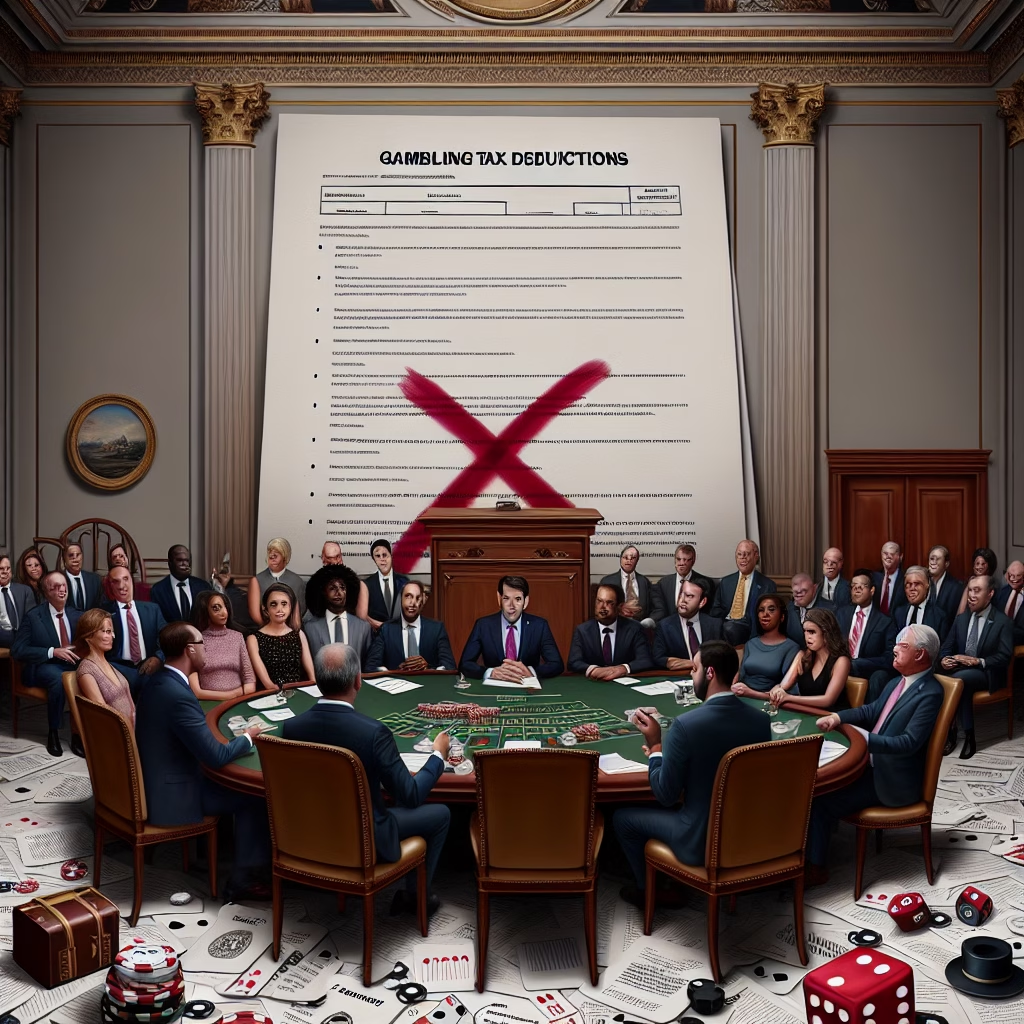
Nevada Representative Dina Titus faced a setback this week when the House Rules Committee blocked her latest attempt to reinstate the 100% tax deduction for gambling losses. This effort was part of the Fair Accounting for Income Realized from Betting Earnings Taxation Act, known as the FAIR BET Act. Originally proposed after the Trump administration had reduced gambling loss deductions from 100% to 90% in its recent budget, the bill has been pending in the House Ways and Means Committee since its introduction in July.
In an unexpected move in August, Titus sought to attach the FAIR BET Act as an amendment to the National Defense Authorization Act. However, the Republican-majority Rules Committee rejected the proposal on Tuesday. The FAIR BET Act aims to eliminate the current 90% cap and restore the full 100% deduction as outlined in the Internal Revenue Code.
After the decision, Titus expressed her disappointment via Twitter, noting that the FAIR BET Act’s rejection was unfortunate. She emphasized that it was a straightforward solution that should have been embraced, hinting at her ongoing determination to rally support for reinstating the full deduction.
In parallel legislative efforts, Kentucky Representative Andy Barr, a Republican, introduced the Winnings and Gains Expense Restoration Act (WAGER Act) in July, while Nevada Democratic Senator Catherine Cortez Masto proposed the Facilitating Unbiased Loss Limitations to Help Our Unique Service Economy Act (FULL HOUSE Act). However, neither of these initiatives has progressed beyond introduction.
The controversy over gambling loss deductions initially arose during the drafting of President Donald Trump’s significant legislative package, dubbed the One Big Beautiful Bill. The Senate Finance Committee, led by Idaho Senator Mike Crapo, played a key role in the alteration of the deduction. The amended figure, capped at 90% instead of the previous 100%, implies that gamblers might owe taxes even when their losses equate to their winnings. Legislative estimates project this adjustment could generate $1.1 billion in tax revenue over the next eight years.
Titus had made an earlier attempt to amend the bill before its passage in the House, aiming to remove this tax change. Despite her efforts, the bill progressed without amendments and was signed into law by Trump on July 4, with the new tax policy set to be implemented in 2026. Following the budget’s approval, Republican Senators Chuck Grassley and John Cornyn, both part of the Senate Finance Committee, revealed to reporters that they were unaware the change in deductions was included in the budget.
This isn’t Titus’s first foray into gambling-related tax legislation. Since 2014, she has been advocating for the repeal of the federal sports betting excise tax, a levy that has been in effect since 1951. This tax imposes a 0.25% charge on all sports wagers in the United States. Titus recently introduced the Discriminatory Gaming Tax Repeal Act of 2025, criticizing the tax for penalizing legal gaming operators who create thousands of jobs in Nevada and 37 other states. She argued that illegal sportsbooks dodge the tax, granting them an unfair competitive edge. Titus recounted asking the IRS about the allocation of revenue from the handle tax, only to find that the agency had no information on it, underscoring the futility of a tax not even tracked by the federal government.
While supporters of the gambling tax restoration, like Titus, argue it promotes fairness and supports legal gaming industries, there are contrasting opinions. Some fiscal conservatives advocate for maintaining the current structure, pointing to its potential for generating significant tax revenue crucial for the federal budget. They argue that the additional funds could be directed towards essential services and infrastructure projects.
From the perspective of economic analysts, the debate over gambling deductions highlights broader issues within the gaming industry and tax code. The gambling sector, particularly in states like Nevada, significantly contributes to local economies through tourism and employment. Maintaining competitive tax laws is essential for keeping the industry robust and attracting international clientele.
The ongoing discourse around the FAIR BET Act and similar legislative efforts reflects the complexities of balancing tax policy with industry growth and fairness. While proponents advocate for the restoration of full deductions to support the legal gambling industry, opponents warn of potential revenue losses. As the debate continues, stakeholders on both sides remain vigilant, awaiting any legislative changes that could impact the future of gambling taxation in the United States. Legislative analysts suggest that as the 2026 implementation date approaches, there could be renewed efforts to push forward with tax reforms that favor the gambling industry, particularly if economic conditions shift or if political dynamics in Congress change.
In this contentious field, Titus remains steadfast in her advocacy, determined to make what she sees as essential changes to support Nevada’s vital gaming industry and the broader national economy. Her continued efforts serve as a reminder of the ongoing battle in legislative halls to shape tax policies that impact millions of Americans who participate in gambling activities. As the situation develops, all eyes will be on future legislative sessions to see if Titus or her colleagues can sway opinion and achieve the changes they seek.
Topics: Nevada · Sports Betting · Gambling Taxes · Financial Results · Gambling Regulation
Looking for somewhere to play? Browse our current no deposit bonus listings, with verified codes and the full wagering terms for each offer.
 4.5/5
4.5/5