
In 2019, Hokkaido’s governor made the pivotal decision not to bid for an integrated resort (IR) licence, a move heavily influenced by environmental concerns. Despite that initial setback, the allure of an IR in Hokkaido never truly faded. Now, Governor Naomichi Suzuki is giving the prospect a fresh look.
The winds of change are blowing, Suzuki remarked during a recent press briefing, acknowledging the potential benefits of an IR project for Hokkaido. He envisioned it as a catalyst for development, attracting private investment and enhancing tourism revenues—a vision that could redefine the region’s economic landscape.
The legislative foundation for Japan’s IR approach was laid in 2018, when the Diet approved the creation of up to three integrated resorts across the nation. This initiative, championed by the late Prime Minister Shinzo Abe, aimed to bolster foreign investment and elevate Japan’s status as a global tourism destination.
Hokkaido was initially positioned as a strong candidate for one of these licenses, with Tomakomai earmarked as a potential site. Hard Rock International was slated to be the operator, proposing a site at Uenae, conveniently located near Chitose International Airport. Expectations were high until the discovery of rare bird habitats in the nearby forests prompted Suzuki to withdraw from the bidding process due to insufficient time for a comprehensive environmental assessment.
The unfolding Covid-19 pandemic further complicated matters. The global gaming industry, once eyeing Japan as its next “holy grail”, saw its ambitions thwarted. Major operators, including Wynn, Las Vegas Sands, Caesars, and others, reconsidered their positions and ultimately withdrew from the race. By April 2022, only Osaka and Nagasaki submitted official applications to host IRs, and of these, only MGM Osaka—a $8.9 billion collaboration between MGM Resorts International and local partner Orix Corp—gained approval, targeting a 2030 opening.
A glimmer of hope re-emerged in December when the Diet appointed new gaming commissioners, signaling potential revival for Japan’s IR prospects. Takafumi Sato, an instrumental figure in crafting Japan’s IR regulatory framework, assumed the role of chairman. He was joined by Junichi Kakimizu and Michiko Watari, bringing renewed vigor to the commission’s ranks.
Interest in Hokkaido’s IR ventures remains robust. Last month, the Hokkaido government initiated a survey among local municipalities to gauge interest in developing an IR. Tomakomai, under the leadership of pro-IR Mayor Suguru Kanazawa, signaled its renewed enthusiasm. Kushiro, too, with its picturesque Lake Akan, is considering the possibilities, although environmentalists may challenge any development that threatens its natural attractions.
Hakodate is also stepping into the fray. Mayor Jun Oizumi has declared the city’s interest, gathering information to assess the potential benefits. Analyst Daniel Cheng noted in October 2024 that Hakodate could draw considerable attention from international operators if the political atmosphere becomes conducive to tendering the remaining casino licenses.
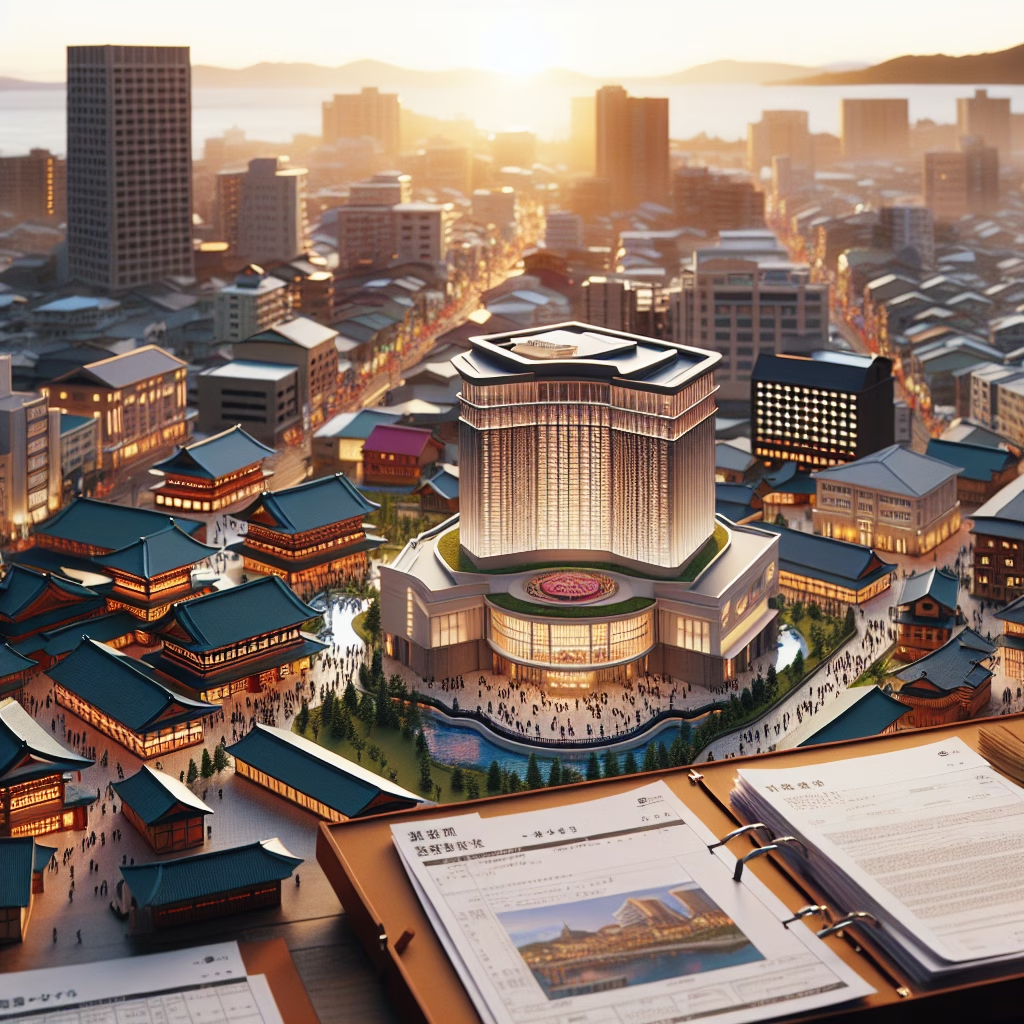
However, any proposed development must secure local support. Hard Rock’s vision for Tomakomai includes an iconic guitar-shaped hotel, upscale hospitality facilities, and a venue for Hard Rock Live, alongside a casino. A unique feature of the proposal is the integration of an Ainu village experience, honoring the indigenous culture of the area and raising awareness about the Ainu people.
As Hokkaido revisits its strategy, the interplay between economic aspirations and environmental preservation remains a delicate balancing act. Proponents argue that an IR could invigorate the local economy, creating jobs and increasing tax revenues. Critics caution against potential environmental degradation and the social impact of gambling.
The renewed interest in Hokkaido’s bid reflects broader shifts in global gaming dynamics. The potential development aligns with Japan’s strategic goals to diversify its tourism appeal and reduce economic dependency on traditional industries. The debate over Hokkaido’s IR bid encapsulates the tension between economic development and environmental stewardship, a theme that resonates across global development narratives.
In the coming months, as discussions progress and plans take shape, Hokkaido stands at a crossroads. The decisions made today could redefine its economic future, shaping the region’s identity for decades to come. With a competitive global market waiting in the wings, the stakes could not be higher for Hokkaido’s IR ambitions.
Topics: Japan · Licensing · Las Vegas · Land-Based Casinos · Gambling Taxes · Enforcement
Looking for somewhere to play? Browse our current no deposit bonus listings, with verified codes and the full wagering terms for each offer.
 4.5/5
4.5/5