

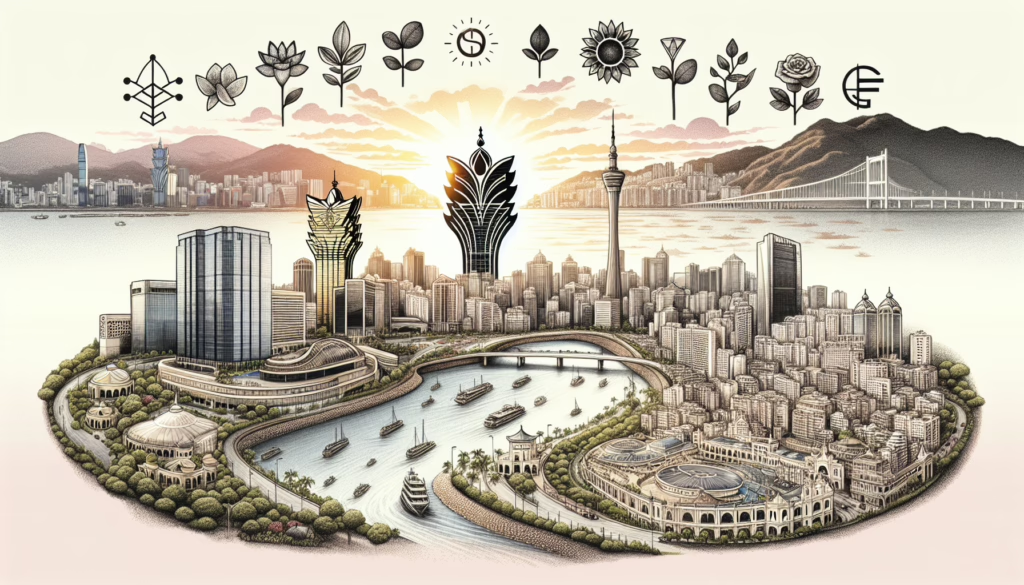
The Macau Economic Association (MEA) released a report on Sunday highlighting the region’s ongoing recovery in gaming, tourism, and hospitality sectors following the Covid-19 pandemic. This recovery is noteworthy given the significant economic impact of the pandemic on Macau’s economy, which is heavily reliant on these industries. For January and February of 2026, gross gaming revenue (GGR) reached MOP22.63 billion and MOP20.63 billion respectively, experiencing a 13.9% increase from the same period last year. This performance indicates a promising rebound, although MEA noted that the recovery remains uneven across sectors.
Tourism, an essential pillar of Macau’s economy, showed strong recovery signs, with visitor numbers reaching 40 million in the previous year, an increase of 14.7% compared to 2024. Officials have set a new target of 41 million visitors for 2026, which would surpass the pre-pandemic record of 39.4 million in 2019. This resurgence in tourism is further supported by high hotel occupancy rates and a positive economic sentiment index, which the MEA projects will remain stable during the first quarter of 2026 with scores between 6.1 and 6.3 points.
Macau’s gaming operators are also seeing positive forecasts from financial analysts. Citi analysts project March’s GGR to reach MOP22.5 billion, representing a 14% year-on-year increase. JPMorgan anticipates growth exceeding 10% for the month, while Seaport Research forecasts a 12.5% rise, contributing to an overall first-quarter growth of approximately 13.4%. These projections reflect a steady recovery trajectory for Macau’s gaming sector, although challenges remain, particularly concerning external geopolitical factors.
The MEA cautioned that ongoing geopolitical tensions in the Middle East could pose risks to Macau’s economic stability. Rising energy prices may increase living costs and impact corporate profitability, potentially dampening consumer confidence. The report stressed the importance of monitoring these developments closely, as they could hinder the balanced and adequate internal development of the region.
This cautious optimism comes in the context of China’s newly enacted five-year plan (2026-2030), which outlines economic goals and strategies that may influence Macau’s growth. However, external pressures, such as geopolitical conflicts and rising global energy prices, could have a significant impact on the region’s economic landscape and consumption patterns.
Looking forward, Macau’s government and industry stakeholders will need to navigate these external risks while capitalizing on the recovering tourism and gaming sectors. Continued monitoring and strategic planning will be crucial to sustaining the recovery and addressing potential challenges that may arise from an unpredictable global environment.
The next steps for Macau include implementing measures outlined in the five-year plan while remaining vigilant to external challenges that could impact the region’s economic recovery. The market will need to adapt to these changing dynamics, balancing growth opportunities with potential risks. As the year progresses, stakeholders will closely watch how these developments unfold, shaping the future of Macau’s economic and gambling landscape.
Topics: China · Macau · Financial Results
Looking for somewhere to play? Browse our current no deposit bonus listings, with verified codes and the full wagering terms for each offer.
 4.5/5
4.5/5