

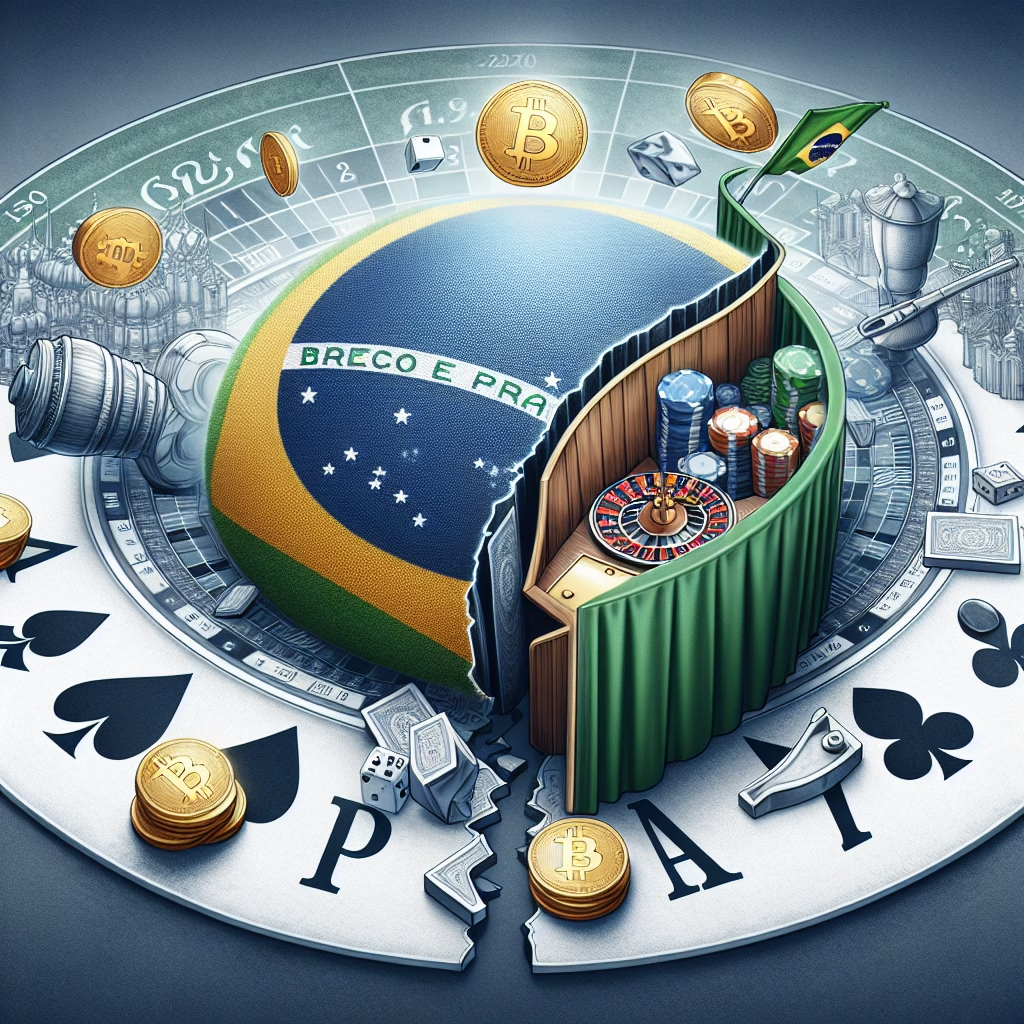
As of January 1, 2025, Brazil’s legal iGaming market has implemented a ban on the use of cryptocurrencies for gambling transactions, marking a pivotal shift away from the once-prevalent unregulated “grey market.” This change is part of a broader regulatory framework introduced by the Brazilian government to enhance market transparency and integrity.
The key regulation, Normative Ordinance No 615, explicitly forbids operators from accepting cryptocurrencies as payment, allowing only electronic transfers. This move aligns with Brazil’s commitment to creating a structured and regulated gambling environment, focusing on controlling financial flows and combating the black market in betting. Industry analysts, such as Dmitry Starostenkov, emphasize that while crypto transactions offer traceability, they provide less regulatory control compared to fiat payments. He noted that the government aims to curb illegal activities by cutting off popular payment methods associated with them.
Despite this regulatory clarity, concerns persist that the ban on crypto could inadvertently drive Brazilian players back to unregulated offshore sites, where such restrictions do not apply. Critics argue that while an outright ban simplifies enforcement, it also risks sidelining players who prefer using digital assets due to their security and anonymity features.
Historically, cryptocurrencies gained traction in Brazil’s online gambling scene due to their efficacy in facilitating peer-to-peer transactions that bypassed local regulatory oversight. The period between the initial legalisation of sports betting in 2018 and the enactment of Law No 14,790/2023 saw a significant rise in crypto-based casinos. Brazil’s high digital penetration further fueled this trend, making crypto a popular choice for many gamblers.
However, as Ed Birkin from H2 Gambling Capital pointed out in the iGB podcast “Right to the Source,” the actual impact of crypto on Brazil’s gambling market has been minimal. He estimated that only 0.7% of transactions in the market involved cryptocurrencies, highlighting that while crypto’s presence was noteworthy, it was far from dominant.
The new regulatory framework has not only banned cryptocurrencies but has also enhanced enforcement mechanisms against illegal gambling activities. For instance, the Central Bank of Brazil now actively monitors crypto exchanges to flag transactions linked to unlicensed platforms. While these measures are aimed at tightening control over the market, some industry voices warn that they may push crypto users further underground.
Licensed operators in Brazil have responded by prioritizing localization efforts and implementing stringent Know Your Customer (KYC) processes. These strategies aim to build trust and guide players into the regulated ecosystem, effectively replacing the allure of crypto with security and reliability.
Global context adds another layer to this development. Birkin’s analysis in the podcast reveals that the global crypto gambling market is estimated to be around $3.5 billion, a stark contrast to the often-quoted figure of $81.4 billion. This suggests that while crypto holds potential, its actual footprint in the gambling sector is relatively contained.
The Brazilian government’s strict stance reflects a broader agenda to tighten control over financial activities and dismantle the illegal betting industry. While some see this as a necessary step toward a regulated market, others view it as a potential impediment to innovation and consumer freedom.
For players accustomed to the advantages of cryptocurrency, such as enhanced privacy and lower transaction fees, the ban may seem restrictive. Yet, from the government’s perspective, the benefits of maintaining a controlled, transparent financial system outweigh the convenience offered by digital currencies.
On the other hand, the move has raised questions about whether Brazil’s approach will set a precedent for other markets grappling with similar challenges. As the global gambling industry continues to evolve, the balance between regulation and innovation remains a focal point.
In conclusion, Brazil’s decision to ban cryptocurrency in gambling transactions represents a significant shift in its approach to regulating the iGaming market. While it aims to foster a safer, more controlled gambling environment, this policy also spotlights the ongoing tension between regulatory oversight and market freedom. As the industry adapts to these changes, stakeholders will need to navigate the complex landscape of compliance and consumer demand, balancing innovation with oversight.
 4.7/5
4.7/5Blitzmania Casino
15 FREE Spins — No Deposit Required