 Harry Grant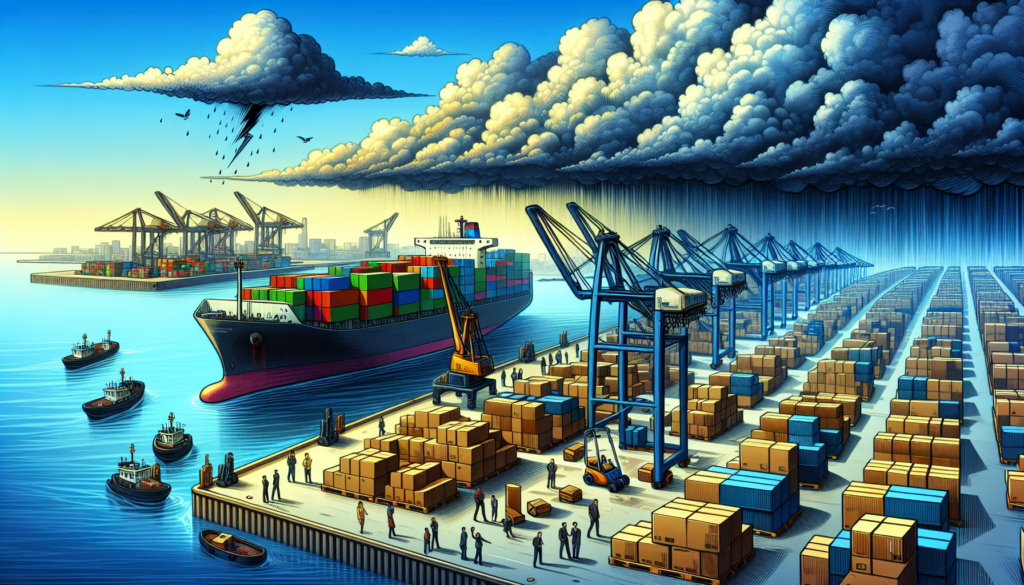
On April 2, 2025, former U.S. President Donald Trump stirred global financial markets by announcing substantial changes to the United States’ tariff policy. This event, dubbed “Liberation Day,” significantly impacted several industries, including gaming suppliers, who continue to navigate the complex tariff landscape a year later. The original policy changes pushed the average effective U.S. tariff rate to 22.5%, the highest in over a century, according to the Council on Foreign Relations. However, a series of subsequent reversals and legal challenges have created ongoing uncertainty. In February, the U.S. Supreme Court deemed most of these tariffs unconstitutional, citing the International Emergency Economic Powers Act (IEEPA) did not empower the President to impose such tariffs. The decision has left gaming suppliers facing considerable uncertainty as they adapt to evolving trade dynamics.
The impact on the gaming suppliers has been multifaceted. Since the Supreme Court ruling, there has been widespread speculation about potential refunds of the tariffs collected under IEEPA, totaling approximately $165 billion. According to a survey conducted by KPMG, a significant number of businesses expect refunds, but uncertainties regarding the legal process and costs are deterring many from pursuing them. The complexity and potential expenses of legal action have caused a substantial portion of companies to hesitate in seeking these refunds.
Daron Dorsey, CEO of the Association of Gaming Equipment Manufacturers (AGEM), has highlighted the challenges faced by suppliers. The ongoing tariff uncertainty has led to hesitation in making long-term strategic decisions. Although there has been some improvement, the industry remains cautious and focused on efficiency and adaptability in response to potential market disruptions. AGEM has served as a valuable resource for its members, facilitating dialogue and information-sharing to help companies navigate these uncertain times.
The broader market has also felt the effects of these tariff fluctuations. The AGEM Index, which tracks the stock performance of key gaming suppliers, has experienced volatility. The index saw a 9% decline from March 2025 to March 2026, reflecting the challenges faced by the industry. In contrast, major market indices such as the S&P 500, Dow Jones Industrial Average, and Nasdaq Composite have shown gains over the same period. The gaming sector’s unique challenges, including the lingering effects of the COVID-19 pandemic and shifting trade policies, have contributed to this discrepancy.
Prominent gaming suppliers like Aristocrat, Light & Wonder, and International Game Technology (IGT) have recorded mixed results since the tariff announcements. Aristocrat shares have fallen by 19%, while Light & Wonder’s valuation remains steady. IGT, now privately held by Apollo Global Management, recently announced workforce reductions. These companies have declined to comment on the situation, but industry insiders suggest that while direct tariff impacts were initially offset, longer-term effects and buyer hesitancy are likely to influence the industry’s trajectory.
The gaming industry’s profitability also hinges on its ability to respond to broader market trends. While the casino sector experienced a post-COVID boom, its growth has not kept pace with the rapid expansion of sports betting and iGaming. However, these sectors have encountered regulatory challenges and slowed expansion efforts, further complicating the market landscape. The rise of prediction markets, perceived as unlicensed gambling, has diverted significant potential state tax revenues, impacting all regulated sectors.
The upcoming review of the US-Mexico-Canada Agreement (USMCA) adds another layer of complexity for gaming suppliers. This trade agreement, initially established in 2020, faces scrutiny amid broader geopolitical dynamics. Potential changes to the agreement could affect supply chains and market access, further influencing business decisions in the sector. The uncertainty surrounding the renewal and potential withdrawal from the agreement underscores the need for suppliers to remain agile in adapting to evolving trade policies.
As gaming suppliers navigate these challenges, they must also consider regulatory compliance. The highly regulated nature of the industry, requiring specific product standards, makes it difficult to adapt swiftly to changes in the supply chain. Dorsey emphasizes the importance of ensuring compliance across numerous jurisdictions, highlighting the intricate nature of the industry’s regulatory landscape.
Looking ahead, the gaming sector anticipates further developments in trade policy and regulatory frameworks. The potential for ongoing adjustments in tariff policies and trade agreements necessitates continued vigilance from industry stakeholders. The USMCA’s upcoming review and the broader geopolitical landscape underscore the importance of adaptability and strategic planning for gaming suppliers. As the industry monitors these evolving dynamics, the focus remains on maintaining compliance while responding to market changes. The path forward involves navigating complex trade relationships and regulatory requirements, ensuring the sector remains resilient in the face of ongoing challenges.
Topics: Mexico · Canada · Payments · Illegal Gambling · Sports Betting · Gambling Taxes
Looking for somewhere to play? Browse our current no deposit bonus listings, with verified codes and the full wagering terms for each offer.