

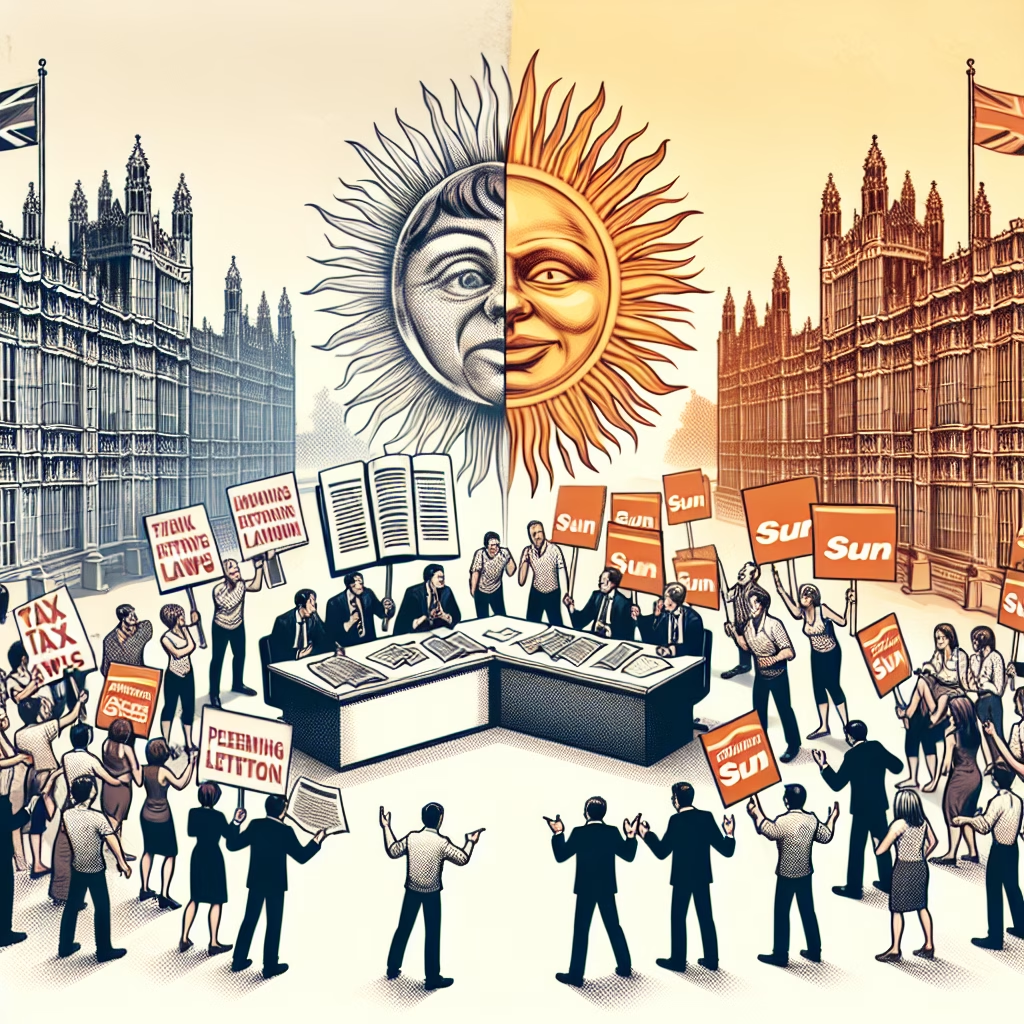
The British political landscape has once again been invigorated by tabloid fervor, as The Sun spearheads its ‘Save Our Bets’ campaign against the Labour government’s proposed gambling tax increase. What began as a fiscal strategy buried in the depths of government spreadsheets has erupted into a national conversation, touching on issues of culture, nostalgia, and economic viability.
The campaign’s imagery is vivid: it conjures seaside arcades, bustling betting shops nestled between the local chippy and the newsagent, and the allure of fruit machines. With 8.7 million daily readers, The Sun frames the tax not as a governmental policy but as an encroachment on “our way of life.”
Initially, the government’s proposal was a straightforward recalibration aimed at both harm reduction and boosting revenue. However, The Sun’s intervention has transformed it into a cultural battleground, with public discourse now equally focused on national identity, high street decline, and individual freedoms. Matt Chapman, The Sun’s racing columnist, encapsulates the sentiment: “By slamming the betting industry, the government will indirectly be telling you how you can – or in this case, can’t – spend your money.”
Previously confined to think tanks and industry specialists, the debate has now surged into the public arena. The Labour government’s ambition to overhaul gambling duties with a potential tax rate as high as 50% of gross gaming revenue (GGR) has garnered intense reactions. The initiative is partly a harm-reduction measure and partly a fiscal maneuver, but it clashes head-on with the romanticized image of Britain’s leisure culture.
The Sun, drawing on its history of impactful campaigns like the 2016 pro-Brexit push, is vigorously steering the discourse. The campaign aims to protect both punters and the livelihoods supported by the high street. Industry bodies like the Betting and Gaming Council (BGC) echo these concerns, warning of possible job losses reaching 40,000 and a £3 billion hit to the economy if the tax hikes are implemented. The threat to high street bookmakers is particularly acute; many claim they face an existential crisis should higher Remote Gaming Duties be enforced.
Support for The Sun’s campaign has swiftly amassed from the political right, especially from Nigel Farage and his Reform UK party, currently the most popular in Britain. Farage, representing Clacton-on-Sea, a town reliant on tourism and gaming, argues that Labour’s tax plans attack British culture and fail to address the root issues of problem gambling.
Conservative Party leader Kemi Badenoch has also criticized the Labour government’s plans, suggesting they represent a “nanny state approach” that could decimate the industry. For Badenoch, the government’s measures are less about financial prudence and more about unnecessarily curbing personal freedoms.
Despite the groundswell of support, The Sun’s campaign has its detractors within the gambling industry. Dan Waugh of Regulus Partners, a leading analyst, expresses unease with the debate’s framing: the simplistic narrative of gambling as a struggle between good and evil oversimplifies a complex issue.
Waugh acknowledges Farage’s role given his party’s popularity but stresses the importance of evidence-based debate. He highlights the lack of balanced political representation for those who enjoy betting and related activities. The current debate, he argues, risks being overshadowed by sensationalism rather than informed policy-making.
On the other side, operators generally welcome The Sun’s stance. Neal Luke, a gambling compliance consultant, highlights the challenge of translating complex data into public understanding. The aim should be to present facts clearly and neutrally, stripped of political bias. With the rise of short-form online content, the necessity for clear, balanced communication is more critical than ever.
Betfred’s Head of Communications, Mark Pearson, emphasizes the precarious position of betting shops, warning that any additional financial burdens could lead to closures and consequential job losses. Flutter UK&I also supports the campaign, asserting that tax increases have tangible repercussions and applauding The Sun for giving voice to consumers who feel overlooked in the current debate.
However, think tanks such as the Institute for Public Policy Research (IPPR) and the Social Market Foundation advocate for higher gambling taxes. Backed by influential figures like former Labour Prime Minister Gordon Brown, they argue that increased taxes could finance efforts to end child poverty, framing the tax hike as a moral responsibility. Brown equates the potential gambling tax to existing high rates on cigarettes and alcohol, suggesting gambling companies can bear the increased financial burden.
Amidst the din, Grainne Hurst, CEO of the BGC, aligns with Reform UK, advocating for a robust, well-regulated gambling sector that contributes significantly to the economy and tax revenue. Dan Waugh views Hurst’s engagement with Reform UK as essential lobbying, though others caution against perceived ideological alignments, which could complicate Labour’s policy finalization.
The stakes are high, with the government balancing the need for tax revenue against the risk of harming an industry that also faces scrutiny over gambling’s societal impact. The Sun’s campaign has indisputably made the gambling tax a hot topic, but whether this will lead to improved policies or further division remains uncertain. As the debate rages on, the challenge will be to ensure that long-term strategies are informed by data and not overshadowed by political theatrics.
 4.6/5
4.6/5